
(For a sermon for Birkenhead Community Church, 20 April 2025)
Resurrection Letter from Tertius
Grace and peace to you in the name of the Lord Jesus Christ. He is Risen!
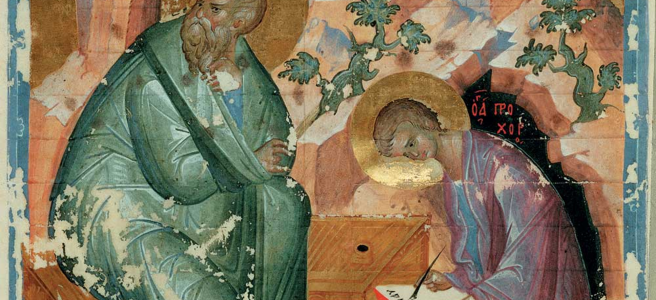
My name is Tertius. I’m a scribe – a letter writer – from the first century. You might remember my name and my greeting from the very end of a letter you call “Romans”. I scribed that letter for a well-paying, well-connected customer… who eventually became a dear mentor and friend. Known as “Saul” around his Greek contacts, we came to know him as “Paul” – the Apostle – a towering figure in the early church, though he preferred to speak of himself as a slave of Christ.
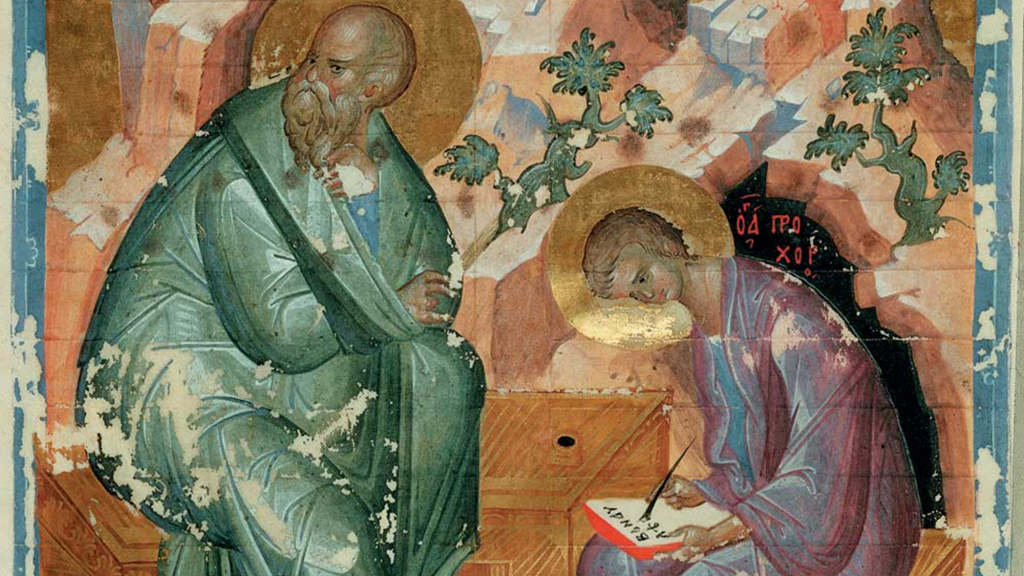
My name, Tertius, simply means ‘third’. Roman families often named children by birth order. First, Second, Third, Fourth… or Primus, Secundus, Tertius, and Quartus. The name ‘Quartus’ also features not far from my greeting in Romans. My name has taken on so much more significance for me now. It signifies so much more than my birth-order. It now points to my Master and Redeemer who was raised the Third day.
Paul and I wrote “Romans” while staying with the wonderfully hospitable Gaius in Corinth. And Corinth is where I am currently writing this letter to you. He tells me you did a sermon series a couple of years ago on the first of Paul’s two famous letters to the Churches at Corinth. So, you’ll be familiar with the ways in which the Resurrection collided with the philosophies and practices of Corinth… a fashionable new colony, full of pomp, athleticism, philosophy… and questionable sexual ethics!
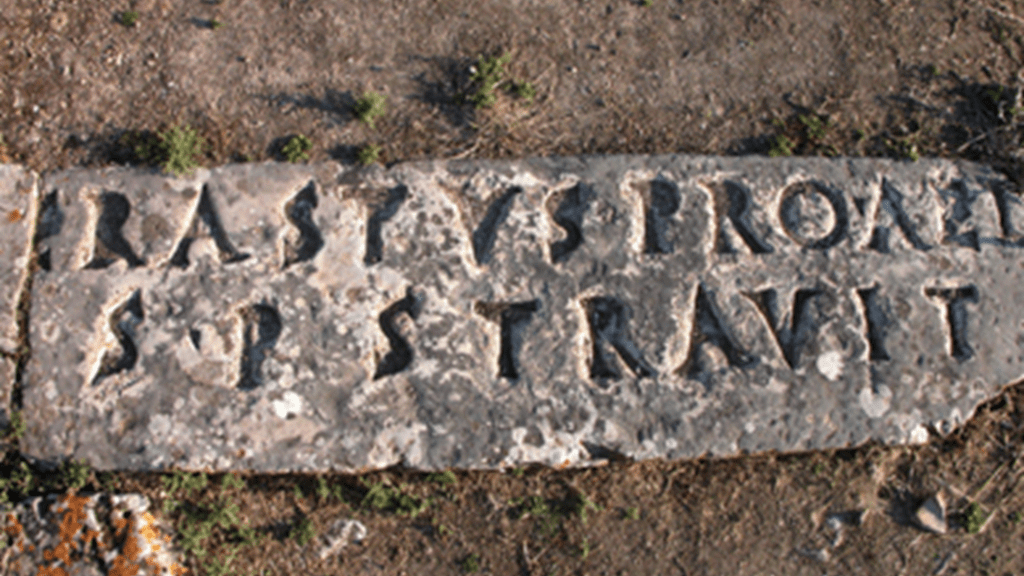
I’d worked as a scribe for a wide range of wealthy people at Corinth. One of these was Erastus, director of public works – like a treasurer for the city. It was significant for a believer to have such an important position… important enough for his name to be inscribed in various places at Corinth. Some of your archaeologists have found a couple of those inscriptions you can still see today. It was Erastus who recommended me as a scribe for Paul. Dale thought it would be helpful for me to tell you my experience of getting a grasp on – or should I say becoming grasped by – the Resurrection of Christ. I pray my words reach Dale in time for him to read to you on Resurrection Sunday.
Ancient scribes like me didn’t simply sit in a dark, candle-lit room with ink and papyrus. We travelled. We consulted. We socialised. This helped confirm details for the letters we scribed. Many of us were educated in rhetoric and had strong language ability.
When Paul employed me for his first major letter to Corinth, I was not yet a believer. Let’s just say, as someone with my level of Greek education, I raised my eyebrows just a tad as I transcribed his words about the ‘foolishness’ of Greek wisdom. I grew to know Paul as a man of deep love and compassion, but he was not afraid of robust dialogue! And I grew to understand that Paul had a surprisingly impressive knowledge of the same philosophers and poets I’d learned about. He could quote, as he did at Athens once, the hymn to Zeus in one minute, and then be preaching the risen Christ in the next. See Luke’s second manuscript, which you call ‘Acts’ for more details, and to get a sense how intelligent Paul really was.
I was fairly familiar with the Jewish religion, but to be the best scribe I could be for Paul, I would need to learn more about this new sect. Paul suggested that I spend a fair bit of time getting to know the various networks of believers at Corinth. He probably had mixed motives… He knew I’d be able to confirm the accuracy of all that was going on… but he also knew I’d be exposed to a community that just might change my life. And that’s exactly what happened.
The Christian communities at Corinth were mostly independent households who would regularly come together in various larger gatherings for special religious meals. Mixing with these communities for a few months, I experienced two very different groupings of people, with very different kinds of dinner gatherings… As I found out, you can tell a lot about people by the way they gather.
As a man trained in language and ideas, I initially gravitated to the more philosophically inclined group. They loved the Greek schools of thought, and eloquent speakers… That’s probably why they came to identify as the people “of Apollos” – one of the more prominent speakers in the early church. By contrast, they were thoroughly unimpressed by a comparatively rough, at times blunt, tentmaking Apostle like Paul. They thought his teaching about Resurrection was nonsense. What would it even mean to have a ‘body’ in heaven? As some of the great Greek thinkers had said, “a dry soul is best”. The soul “flies from the body as lightning flashes from a cloud.” You don’t really want, let alone need a body in the heavenly realms. So… Resurrection of the body felt strange. Unnecessary. Restrictive. Clunky. Even dirty…
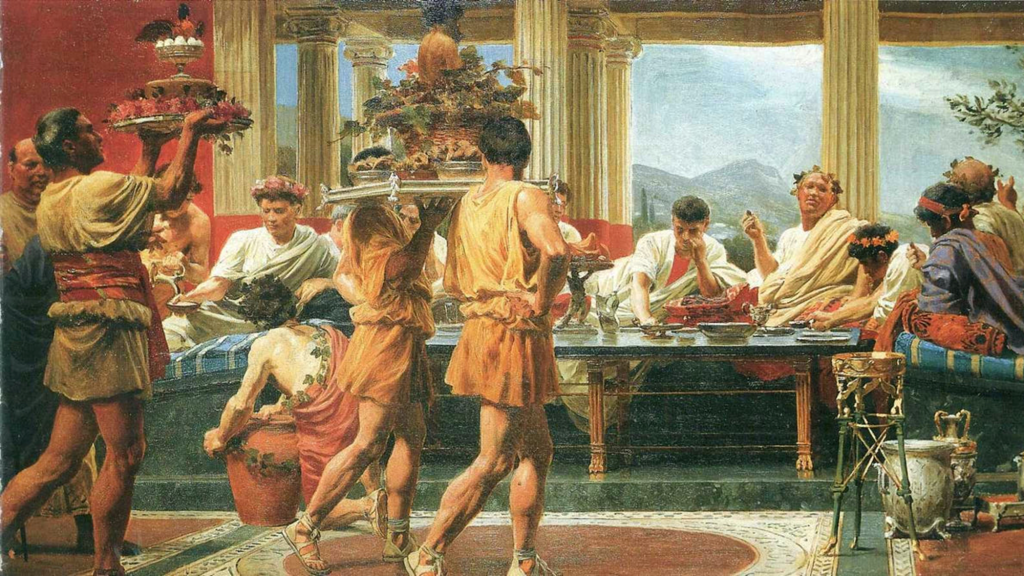
A typical dinner for these folks was luxurious and intellectual. The loftiest ideas – for those who could understand. The finest food – for those who were invited. Meticulous decorations. You folks might say it was “Instagram-worthy.” As in Roman symposia, the most important people were given the best spots. Servants kept every wine glass topped up and every plate loaded… whatever the guests wished for. I was well-familiar with these kinds of lavish gatherings composed of such cosmopolitan characters. This was the clientele I would often write for. They paid well.
A city like Corinth had plenty of hungry unfortunate folk… Their natural place was on the street… but having no understanding of how dinner invitations work, they sometimes would find their way into those gatherings… These sad folks were tolerated… permitted to watch… provided that they would not disrupt our proceedings with their sounds… or their smells… Someone told me about a beggar who wandered in months ago… he literally died of hunger. No ‘body’ in the gathering had noticed… Out of sight… and out of mind… in an adjacent room, he’d quietly fallen asleep… permanently. Thankfully, some of the servants of the house were believers and they tended to his body… though they gave his burial more time and expense than most would have thought appropriate…
The attendees at these gatherings were typical in their Corinthian-style immodesty and what we might call ‘ethical flexibility’. Controversially for many, the heads… and bodies… of some of the women… could frequently be uncovered… Many attending these gatherings could also be spotted taking part in proceedings at the temple of Asklepios… some even participating freely in the infamous after-parties, where more than food was on offer… “The body is for meats!” was a rationale which applied just as much to sex as it did to food. Such people latched on to some of Paul’s language about being ‘free’ in Christ… conveniently forgetting the parts about self-control and considering others… Such logic had one member proudly justifying a sexual relationship with their father’s newest wife… In Greek ways of thinking, matter didn’t truly matter. And apparently neither did the body. It was merely a temporary tool for attaining pleasure and status. A costume.
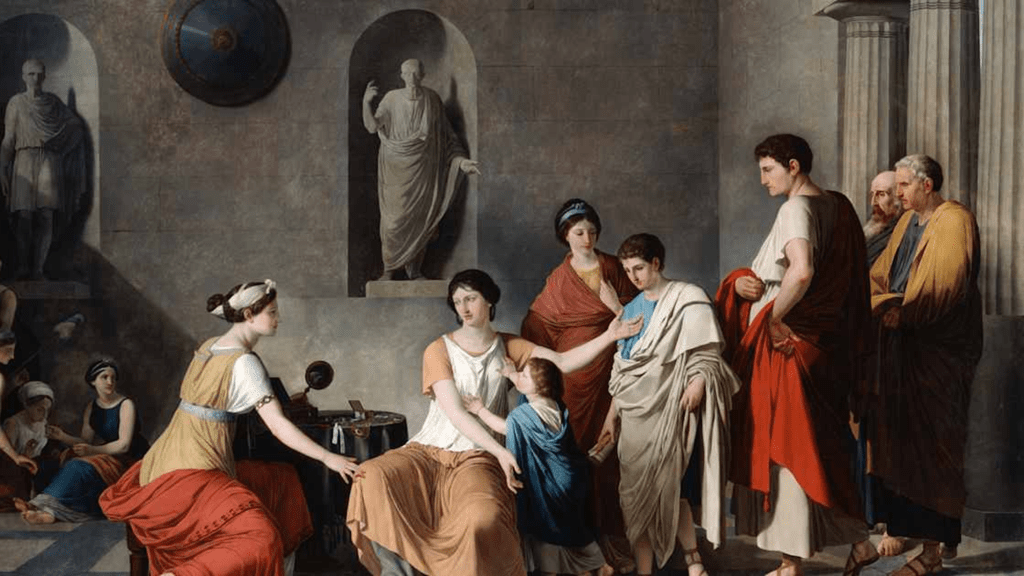
By contrast, the dinner gatherings of Chloe and her household were strikingly different. Chloe was a very successful businesswoman, and one of the early Greek women to join the way of Christ. She stood in a rich and fruitful line of leading Christian women – stretching from that early Resurrection morning by the tomb to now. Mary, Phoebe, Lydia, Priscilla, Junia and Chloe. And more… Women who changed the world. Chloe owned a number of olive groves and her oil was prized and distributed all over the region. Since following Christ, although Chloe’s business continued to be profitable, she was less motivated to maximise business success, and more interested in people, ministry and the Good News.
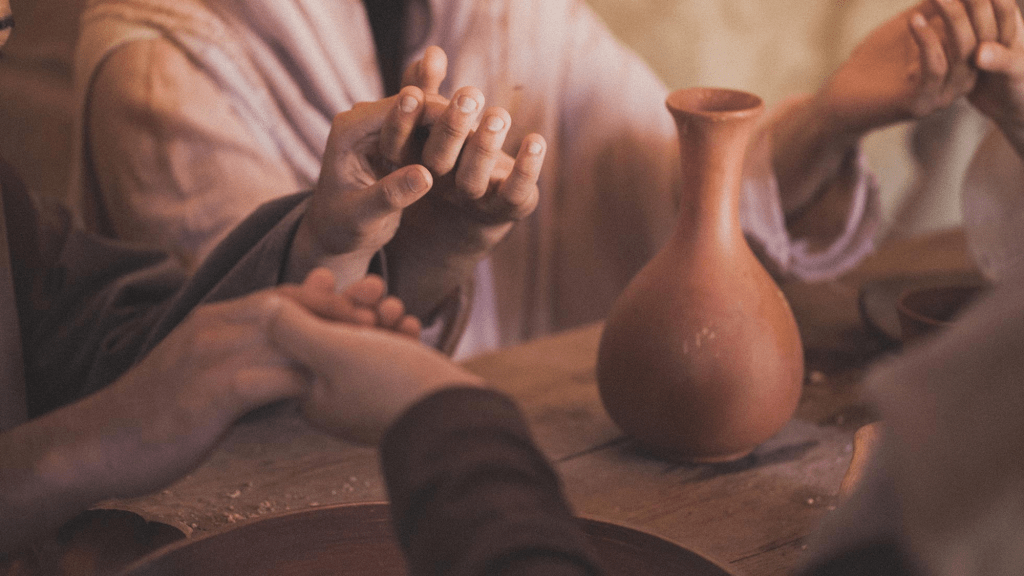
The social dynamic of her gatherings was something I’d never seen. And I’m not talking about the generous amount of Chloe’s premium olive oil at her table. I’m talking about the awkward, uncomfortable disregard for rank and status. Quite simply, there were no special guests eating special food in special places. Indeed, the only ‘special’ person at this meal was the risen Lord Jesus, who they insisted was present with them – especially as they broke a ceremonial loaf of bread and shared a cup of wine. More on that later… This dinner, with Jesus at its centre, seemed to be open to the whole world. It was for every… body. Glamourous bodies and disabled bodies. Rich and poor bodies. Jew and Gentile bodies. Male and female bodies. The altered or differentiated bodies of eunuchs. Every ‘body’ shared the same table…
In his letter, Paul had mentioned a number of people who were still alive who claimed to have seen Christ alive after his crucifixion. I was shocked to learn that two of them were part of Chloe’s household. Could such a thing really be true? If so, what did that even mean? How did it fit with the philosophy I was so arrogantly proud of? What was the significance of a single person being raised from the dead? What philosophical relevance did it have for the rest of us? And yet, this strange Resurrection philosophy was clearly animating these people… They were convinced, philosophically and practically, that the purpose of the ‘body’ was not directed at sex or food… but at serving the Lord and one another. It was clear that their future hope in the resurrection of the body was the motivation behind their concern for every ‘body’ here and now.
So different from the Apollos group! Instead of debates dominated by speakers, these gatherings were ordered. They prayed in turn. Read scripture. Chanted Psalms. There were moments for everyone to respond together as one Body saying responsive phrases like “Jesus is Lord” or a simple “Amen.” You didn’t have to be a scholar to participate. Every ‘body’ had something to give… and something to receive.
I’ll never forget meeting Chloe’s adopted son, who she had named Anastasios, which means ‘Rising up’. His body was a little small for his age. His thin legs were unconventionally angled. Others helped him with his meal. He thanked them and took his turn leading the gathering in prayer… speaking slowly but with definitive clarity. His tone and eyes radiated joy. Chloe had taken him in off the street – literally. He did not know his parents. You see, a practice that was common in the Roman world, which I have now come to detest, was leaving disabled or deformed infants ‘exposed’… to die… in a ditch. To have a body that was not ‘healthy’ was unfashionable for cosmopolitan Roman families. The resurrection of Christ, and the resurrection to come, had transformed Chloe’s mind. She valued lives and bodies that were unwanted…

Chloe would always introduce Anastasios as one of the teachers in the household. “He teaches us how to serve and be served. To give and receive. How to hope, believe, pray, and persist through suffering.” She meant every word. And she was absolutely right. God truly uses what we think of as ‘weak’ to humble those we think of as ‘strong’…
I began to see the true foolishness of the intellectual debates of the Apollos crowd, and the true wisdom of the radically counter-cultural Resurrection ethics of Chloe and her household. Their communal life embodied the Gospel. It was a letter to me… a letter I was learning to read… and a letter that was ‘reading’ me…
I had always thought that the values, ideas, and lifestyle I had inherited from Greek culture was so strong, wise, and glamorous. But I was now clearly seeing that they contributed to a world-system that divided people into those that mattered and those who didn’t… the strong and the weak… the valued and the worthless… the honourable and the dishonourable… the high and the low… the rich and the poor… the successful and the forgotten…
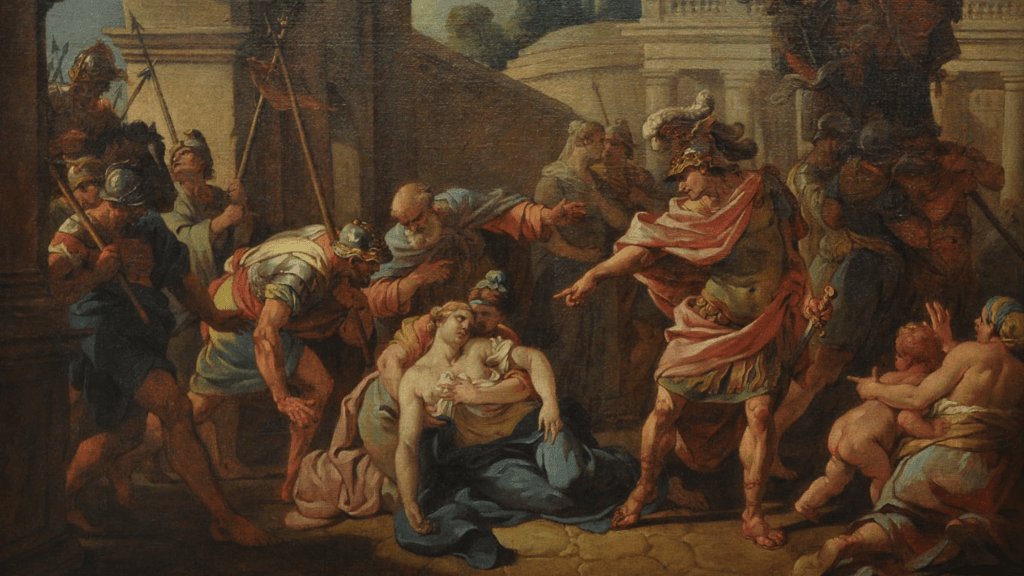
The comfort and living of a select few was built on the suffering and death of many… The more time I spent with Chloe and her household, the more I cared about every ‘body’ my world-system was harming. I felt dead… trapped within the system. I wanted out. I needed to get free. I needed what Chloe and her household had. I needed everything their Christ offered and gave… I needed to be raised to new life.
One evening after the gathering, I spilled all this out in conversation with Chloe and a few others. She told me that in confessing this with my mouth, I had already begun to receive the new life I knew I needed. As they prayed for me, I felt waves of freedom, and purpose, and life flow into my mind, heart, and body. A new Spirit.
I was due to return to Paul with a report on my time, which now included news of my own conversion. Paul beamed with joy, and when I asked if he could answer my many questions he eagerly agreed. It turned out that writing that second letter with him provided us with a timely opportunity to continue our conversations to help me grow in my understanding.
The Resurrection really is the truth that holds all other truths. When Christ rose on the third day, the ultimate future of humanity and even the cosmos, walked out of the Tomb. The future had rushed into the present. His risen and indestructible body was the template for the transformation, redemption, healing, and glorification of the entire human person: bodies, brains, neurons, hearts, motives, wills, relationships – our entire selves will be made new.

All kinds of bodies will be glorious and free. Male and female bodies. Modified and mistreated bodies. Abled and differently abled. All bodies need freeing and healing. Resurrection does not mean the perfect male and female bodies look like Achilles and Aphrodite, or to use some of your examples Brad and Angelina. No. Resurrection will make you more you, not more like some generalised ideal from Greek or any other cultural imagination.
Just as Christ’s risen body still bore the wounds and scars of the Cross, so too our bodies will be redeemed to reflect – and heal – all the experiences, deformities, modifications, injuries and anything that hinders us. Our bodies will be liberated into glorious freedom.
The Resurrection also extends to every corner of the cosmos. New gardens, new cities, new oceans, new ecosystems, new solar systems. New stargazing. New moon-rises. New biology. New chemistry. New physics. New Creation. New Heaven. New Earth.
This ultimate future is to be anticipated now. Resurrection means we have work to do. Justice will reign in this this New Heaven and New Earth. Justice for every Body. We anticipate Resurrection when we work to feed, clothe, house and care for every Body.
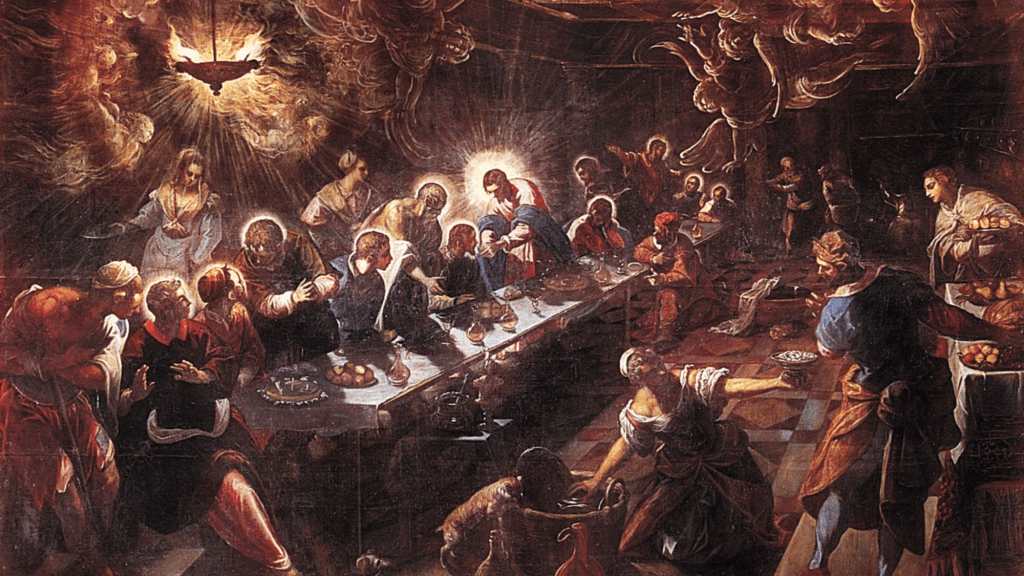
And we practice our care for every Body when we practice communion. Communion is for every Body. It’s not a sumptuous meal with my best mates who are just like me. It’s not about ignoring others to have a private moment with me and God. It’s about practicing Common Union as one Body.
And so, my sisters and brothers of Birkenhead Community Church, when you gather around the table of the Lord, do not feast like the world. Remember the Lord’s death. Proclaim his Resurrection until he comes again. Celebrate as one Body. Honour every Body.
Christ is Risen. He is Risen Indeed. Alleluia.
In the common hope of Resurrection from the Dead,
Tertius.

 Recovering the Kingdom