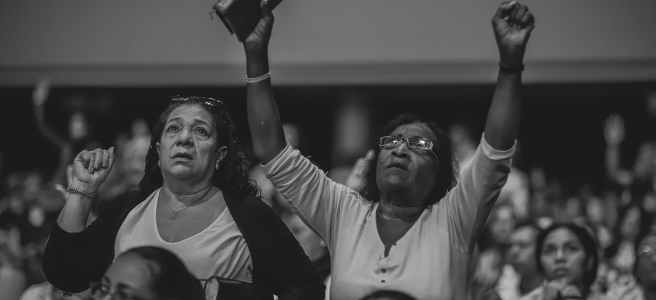

spirit direct my tongue

Lord, open my lips, and my mouth shall declare your praise. (Psalm 51:15)

However and whenever I use my tongue, I am increasingly away of the need for my speech to be spirit-directed. There are a few categories of spirit-directed speech that are useful to recognise:

spirit directed proclamation

Whatever form or format the proclamation takes, be that preaching in a church, directing a film, or designing an image for a billboard or Instagram (and I don’t ever expect to do two of those four!), there is a stark difference between engaging in those tasks with a mind and heart full of self, or filled with Spirit.

spirit directed conversation

Whether it be the most gentle listening and coaching, or the most urgent and heated must-have dispute, again, there is a clear distinction between the Spirit directing me to speak words filled with truth and grace, or my ego directing me to speak words filled with half-truths, defensiveness, insecurity and manipulation.

spirit directed prayer

When I pray, I may use a prayer book, I may let my mind chase the Spirit’s heart with unplanned words, or indeed I may silently speak to God in the quiet space of my own mind and heart. In all of those ‘modes’ I can either be led by the fear and pride that flows from ego and flesh, or I can be prompted or awakened by the Spirit enabling me to read, pray or meditate along the lines of love, humility and courage.

spirit directed tongues?

I have no personal experience of what most people call tongues. But even with my lack of experience (and putting to one side the exegetical interpretive questions I can hide within) I can imagine that whatever kind of speech that is borne from the movement of my tongue, be that a) a spontaneously and miraculously given and previously un-learned human language, b) a humanly-unintelligible angelic language, c) wordless groans, or d) a simple, humble and playful kind of free vocalisation offered to a Father by a child seeking an encounter that transcends rationality, it is the Spirit that makes such speech edifying or selfish.

Lord, open my lips, and my mouth shall declare your praise. (Psalm 51:15)

the king and the parent

As the theologically-astute preachers’ line goes, “If you want to know what God is like, look at Jesus.” When it comes to the Lord’s prayer, we are not so much looking at as listening to Jesus. He speaks of God as “Our Father”. God is just ‘like’ a Father, God is a Father.

Much has been said about how it is virtually and psychologically impossible for our human experiences of fatherhood (and motherhood) to not colour the way we understand and experience our relationship with our heavenly Father.

For those of us who have the privilege of being parents ourselves, this dynamic divides into two: We experience parenting ‘upwards’ and ‘downwards’. And both experiences colour us.

Positively we may be able to remember wonderful moments where our parents imprinted us with God-like love. And we likewise may have managed to have supremely divine moments where we were conscious of participating in truly loving parenting to a child of our own.

Negatively, however, our ‘upward’ experience of parenting in various ways can be a source of wounding as we recall various times that we were under-parented or over-parented, manipulated or abandoned, spoiled or abused.

Likewise, our ‘downward’ experience of parenting can provide a steady diet of shame as we fail, again and again, to live up to even our own limited standards of what a good parent should look like, and see the disappointment in our child.

In short, upwards wounds damage our trust in our parents, and downward shame damages our trust in ourselves. It is psychologically hard work, shall we say to trust God when our trust in our parents and ourselves is broken. We may scan the Bible and find stories that seem, especially when disconnected from the scriptural metanarrative and interpreted in the counter-narrative of progressive secularism, to show a God acting in ways that are wounding.

Back to Jesus we must go.

Jesus shows us not only how to truly see the loving Fatherhood of God, but also what it looks like when a Son fully trusts and enjoys that fatherhood. Jesus shows us a Father that is just, for sure, but radically merciful and self-sacrificing. A God who can be trusted.

thoughts on prayer

Prayer is unavoidable. We are always praying. We are always giving expression to spoken or unspoken, conscious or sub-conscious hopes, longings, hurts or questions.

Specifically, prayer is the essential, basic and transformative practice that followers of Jesus the King must engage in if they are to even begin to truly participate in the life of the kingdom. There seem to be different levels or modes for this.

  • At one level, prayer is all about personal sustenance and devotion. Whether this looks like a desperate plea for God’s presence, power, transformation, rescue, and deliverance, or a disciplined habit that trains and forms me in the shape of Jesus.
  • At another level, prayer is about communal development and formation. This could look like a simple shared practice where we support one another on the road of discipleship, or like an intensive and rigorous programme of activity to collaboratively pursue dynamic change in a community.
  • At another level, prayer is about societal transformation and revival. This could look like quiet, gentle and empathetic longing for the local and global state of affairs to shift in God’s time, or a public protest march calling on God to judge, heal & revive society.

All three of these modes of kingdom prayer ask for, plead for, work for, long for, seek for the transformative presence of God. In my personal space. In a shared community space. In my neighbourhood, city, nation or indeed the world.

All three modes of prayer pray the same three words over hearts, communities and societies: Come. Lord. Jesus.

recovering culture

As a new Christian in the United States between 1999 and 2005, I noticed a strong discourse around ‘taking our country back for Christ’. The language rests on a simple and straightforward way of seeing things. 1) ‘America’ used to be ‘Christian’, and has been ‘taken’ (or taken over) by influences that are not ‘Christian’. 2) It is vital that we reclaim what has been ‘taken’ (cue Liam Neeson). The geographical focus is ‘America’, and the time-frame is the last hundred or two years.

Since then, my reading of the cultural landscape has changed. I still (try to) view reality through the lens of the biblical narrative, but my reading is longer than a couple centuries, and wider than one country. Here’s how I tend to read things now-a-days…

In my reading, the Gospel is good news for all cultures and nations; both in terms of ultimate destiny and present-day circumstances. In these reflections I will focus on the Gospel’s influence upon culture. Human culture, as a manifestation of human nature, comes under the loving and truthful eyes of the Gospel, which can see it’s gifts as well as the ways it curves in upon oneself and hinders flourishing. I want to suggest that there are these phases (not always linear) for any culture, based on relationship to the Gospel. I’ll restrict myself to brief reflections here:

  • Culture lacking Gospel transformation
    • This refers to ‘pre-Christian’ cultures. Native or indigenous cultures. A balanced doctrine of human nature will enable us to assert (with appropriate humility, balance and generosity) that human nature – and thus human culture must always be described by reference to both positive image-bearing.
      • Christians must relate carefully to these cultures. They can affirm God’s presence and working in all creation, and including these cultures. Christians should neither demonise these cultures nor view them with naive (condescending?) positivity. Instead, get to know them. Listen to them and understand them. Share your understanding of the Gospel with them. See what they might see that you missed.
  • Culture cultivating Gospel transformation
    • This is, in the best sense of the term, ‘Christian’ culture. By this, we refer not to a ‘perfect’ culture, but to any and all enculturated embodiments of culture which bear witness to the transforming influence of the Word and Sprit of Jesus. These are moments where the kingdom of God is seen in tangible form. In the name of Jesus, outsiders are welcomed, sinners repent, God is worshipped, food is shared, justice is advocated for, creation is cared for, and the sphere of God’s redemption advances – if but for a moment.
      • Christians should obviously maintain, by the power of the Spirit, an ongoing cultivation of kingdom culture. There will always be blind spots to uncover, and good things to keep up.
  • Culture forgetting Gospel transformation (‘Sub-Christian’ culture)
    • This is a ‘Sub-Christian’ culture, which has experienced the transformation and influence of the Gospel, but fails to continue to actively cultivate that culture so that it continues to grow and flourish. It is when love grows lukewarm and is in need to reviving. It can happen nationally, locally, in a church or in an individual.
      • Christians should be on guard against forgetting the Way. We should not become so routine or cold that we lose heart and vitality. Being faithful in prayer, seeking out fellowship with others not like us, and maintaining a posture of a servant are key ways to do this.
  • Culture forcing Gospel transformation
    • Here we refer to a kind of ‘Hyper-Christian’ culture that is more characterised by talking about the the Gospel, and convincing others than embodying it and sharing it wisely. It is more focused on forcing transformation on others than being transformed itself.
      • Christians should avoid this kind of forceful approach. It does more harm than good, and turns many away who see it as aggressive. Theologically, you cannot force transformation anyway. All we can do is work on ourselves, and share with others in an invitational way. Let God do the work and let them respond to God.
  • Culture rejecting Gospel transformation (‘Post-Christian’ culture)
    • This is the ‘Post-Christian’ or ‘secular’ culture familiar to a good deal of Europe, North America, Australia and New Zealand. These cultures feel they have out-grown Christianity. Citizens of such a culture identify as ‘spiritual but not religious’. They relish in being compassionate and kind and believing in justice and equality, but don’t realise that in rejecting the Christian narrative they also reject the foundational source of meaning that underlies those qualities.
      • Christians in a ‘post-Christian’ context should seek carefully to discern the times, and know when to speak and when to be silent. We can show secular people how we understand the foundations for ethics and values, and we can even share our view that secularism has no rational foundation for its values, but mostly we must stick to our own cultivation of kingdom culture, and avoid being too passive or aggressive.

If your enemy is leprous, heal him…

2 Kings 5 neatly contains the story concerning Naaman the Syrian.

One gets a strong sense why Jesus (in his famously offensive sermon at the Nazareth synagogue – Luke 4) chooses – of all the stories in the Hebrew Bible – this story as one of the two stories to reference. The reason seems to be the particularly strong example the Naaman story provides of love for enemies.

The concept of loving your enemies is and always will be inescapably baffling. If the love we are talking about isn’t baffling, it can’t be enemy-love.

We tame this concept by talking about enemies as though they are not really that bad or hard to love. Enemies are the ones trying to kill you, shame you, discredit you or otherwise take you down. They are in direct opposition to you. To love your enemy is to think and act in favour of a person who is anti-you.

Loving your enemy is the ‘wrong’ thing to do, but nonetheless is ‘right’ in God’s economy.

There are a number of Godly ‘wrongs’ in this fascinating story:
We’ll just look at two. One by God, and one by a young girl…

God gives victory to Israel Syria!?

No, this passage is not written by someone with Dissociative Identity Disorder. God is for Israel! (verse 15) God is for Syria? (verse 1) No, this is indeed the Hebrew Bible, and the God revealed in this story is the God of Abraham, Isaac and Jacob (Israel).

What we see here is not God switching teams willy-nilly, but rather we see something about the generosity and sovereignty of the God of Israel. We are told provocatively in verse 1 that “the LORD had given victory to Syria” through Naaman.

To say that God is the God of Israel is not to say that God only does things for Israel. God causes the rain to fall on the just and the unjust. The God of Israel also gives land to other nations, and (as Paul says in Acts 17) is sovereign over the times and places where all people live. God has a specific salvation story playing out through a particular nation, but remains the universal cosmic Lord over all creation, all humanity and all nations. We see this in God giving victory here to Syria, and also in places like Deuteronomy 2 which describe God’s provision and protection for Moabite land.

Enslaved girl seeks her captives’ death healing!?

One doesn’t need a vast knowledge of ancient socio-political dynamics to grasp the tension between in this passage. Verse 2 makes it clear:

Now bands of raiders from Syria [a.k.a. ‘Aram’) had gone out and had taken captive a young girl from Israel, and she served Naaman’s wife.

2 Kings 5:2

It reads like a horrific newspaper headline. “Raiders… Taken Captive… Young girl.” Imagine this girls’ family reading the positive description of Naaman in verse 1!?

She must have been able to see Naaman’s humanity. Instead of wishing him dead, she wishes him healed. Verse 3: “If only” Naaman could see “the prophet who is in Samaria…”

This “young girl” is a shining example of one of the highest commandments in all of Scripture – “love your enemies” (Matthew 5:43-45).

pray or go insane

I don’t identify as a super spiritual person.

This is a bit ironic of me to say. Half of my job is focused on prayer… I have a lot of thoughts about prayer… I could probably write some half decent academic essays about prayer… But this has absolutely nothing to do with me being an amazing person of prayer. I have decided that being an award-winning prayer person is not required to serve others in the pursuit of more and better prayer. But I feel myself settling and surrendering more and more to the vitality of prayer for me, and the desire to grow as a person of prayer.

So this post is something of a confession, a declaration, a faltering manifesto of sorts… about my intermittent yet incessant insistence on the infinite importance of this ancient spiritual practice we call prayer.

In my experience and understanding of human existence, we are always praying. To live is to pray. To think and distinguish between this and that, to make goals, to prioritise… This is prayer.

Whether we pray to the God and Father of our Lord Jesus Christ in the presence and power of the Holy Spirit, or to the universe, or to another conception of a higher power, we all pray.

Even for those who may not have concrete moments, rhythms or conscious practices of prayer… We all pray.

It is psychologically impossible, for even the most convinced atheist, to rid themselves entirely of even the slightest trace of gratitude, expression of need, desire for a certain outcome or states of affairs, or reverence for reality. And we would be entirely mistaken to fail to mention those less obvious forms of prayer like confession and lament. The latter of the two, prayers of lament, can at times take aggressive form of accusatory prayers. These prayers express confusion, intense dissatisfaction, and disappointment with the way a particular situation (or the whole sum total of all situations… Reality itself) is going. What else is a hardened unbeliever doing when they dismiss the goodness or the existence of a God, but engaging in intense, sustained, accusatory prayers of lament?

We all pray. And we are always praying.

We pray for good, just and righteous things. But we are also praying when we are at our worst. The only difference in these moments is that we (knowingly or not) are praying to different gods. We pray to the gods of fame, fortune, lust, success, acquisition and distraction.

These are often very subtle prayers, especially for those who identify with faith or a religious tradition. When the church secretary, for the briefest moment (or for years in their role), wonders if people will notice the bit of extra work they did on that thing; they are praying – a little bit – to another god. When the good bishop checks the engagement of the social media account, it is very likely that prayers to another god are simultaneously being made.

In my few laps around the sun, I’ve gotten to know the basic impulses that push me to pray to these others gods. I know my anger, fear, lust, resentment, self-pity, victim mentality, rescuer complex and delusions of grandeur well enough to know… finally… that…

I have to pray or I’ll go insane.

Not just any prayers, but good prayers. Balanced prayers. Healthy prayers. Prayers that encourage me and challenge me. Prayers that comfort me where I am afflicted, and prayers that afflict me where I am too comfortable. Prayers that lift me up out of my insistence that I am insignificant or disregarded by God, and prayers that coax me down from the exalted heights to which I lift myself (so often to compensate for the times I feel low).

I cannot allow my constant praying to go untended, lest my prayers be pushed in the dual directions of apathy or vainglory. I cannot wait until I spiritual enough to pray – for it is by prayer that my spirituality is shaped. I cannot wait until I have my questions and puzzlings about various parts of the Bible sorted out – for it is in prayer that I continue this dialogue with God. I cannot wait until I feel morally ready to pray – for prayer is the pathway to joining my life to God.

Here I kneel. I cannot do otherwise. Amen.

diversity within the binary

Thinking about, let alone talking about matters of sex and gender and trans identity is controversial and therefore difficult. An experience I had this morning reminded me of something I don’t want to forget when it comes to all of this.

I walked past a clothing store which always has large banners with models showing some of their clothing store. In the past few months I’d noticed that some of the models at least seemed to be trans models. Both trans men and trans women. I’d theorised in my mind about the extent to which this choice of model (if they were indeed trans models) was motivated by sincere allyship to trans people, and how much it was to profit from being seen to be in line with the current of modern discourse.

Green-washing, rainbow-washing, and now trans-washing?

I didn’t linger too long on this curiosity. Who knows?


Over the last few days I’d noticed new banners with new models.

The figures were wearing women’s clothing, but their facial structure and features appeared masculine to me, which caused me to wonder – were these transwomen? At first this wonder quickly became an assumption: yes. But then I asked myself: to what extent is it helpful to assume they were indeed trans?

I was reminded of just how diverse peoples physical and facial characteristics can be.
Assumptions don’t really help, to my mind?

Aside from those who identify as non-binary, there remains a lot of diversity of physical characteristics even within the binary of male and female. The stereotypes have much to answer for.

There have always been, and always will be, men who are not very ‘macho’.
There have always been, and always will be, women who are not very ‘dainty’.

If God creates men that are macho and men that are not – shouldn’t we affirm and celebrate all their body types?
If God creates women that are dainty and women that are not – can’t we see the beauty in all body types?

As I said, talking about anything trans usually becomes very divisive almost instantly. Maybe… just maybe… instead of taking on the annoyed posture that asks everyone ‘what is a woman’, or maybe… instead of naming and shaming those who have views other than those reflected in the mainstream, we could learn something from all of this?

Maybe we can remember to appreciate the diversity of the bodies God creates.

justice with mercy

Mercy is a fundamental quality of both the King and the kingdom.

Mercy is the kind of loving restraint that refrains from inflicting the fullest possible punishment upon someone. In the pursuit of justice, for example, mercy means we do not seek the fullest punishment.

In Aotearoa New Zealand at the moment, a trial is beginning involving a mother who killed her three daughters. Nobody is trying to defend the actions, but the line of defense seems to be the claim that the mother was insane at the time.

I want this trial to characterised by justice, but justice with mercy.

On the one hand, let justice be fully done. Everything that can be factually confirmed and proven in court matters. If she was not insane, let that be shown. Let truth win out. Let the necessary consequences come.

But on the other hand, let justice be done with mercy. May our understandable horror at the murder of innocents not lead us to demonise and destroy. Let us not repay evil with evil. May we hold out loving hope for repentance. May there be ways for this mother to come to terms with what she has done and become useful to others who have either committed similar crimes or may be in similar situations where such crimes are committed.

Let justice be done. With mercy.

Uriah, the anti-David

I just got up to 2 Samuel 11 this morning in my daily Bible readings.

It’s a familiar sad story, but I was struck by the contrast between Uriah and David.

David pursues Bathsheba with almost no restraint. He has every reason not to sleep with her. She is not his wife, for starters. In spite of those reasons, we are given a progression of his pursuit of her. Having ‘remained at Jerusalem’ (not fighting with the men), during a restless night of walking on the roof, he sees her bathing (could have left it there, but no). There is a implicit suggestion that he then lingers on the look, for we are told that she was ‘beautiful to behold’. He inquires about her (probably didn’t help). He sends for her (using his power, position and privilege as king). And then lays with her. After hearing of the pregnancy, his pursuit now turns to Uriah, getting him home and (hopefully) into bed with his wife, then getting him drunk, and finally getting him killed.

By contrast, look at Uriah. He is not safe at home, but actively helping fight alongside his fellows. Unlike David, who calls him home, he is unwilling to do what he is entitled to. He has a ‘right’ to sleep with his wife, surely! But he gives up his rights for what is honourable. He would have been tired from battle. He would have missed his wife. Still he chooses honour. Even when David successfully gets him drunk, he opts to sleep outside rather than go in to his house and lay with his wife.

David is driven by his lust. Uriah is driven by his convictions.

potential & real sinners

I’m not an alcoholic.
But… I’m a real fan of the 12 steps of Alcoholics Anonymous.

The forward to The Twelve Steps and Twelve Traditions (a.k.a. the 12×12) acknowledges that the contents of that book (and AA wisdom more generally) “might arouse interest and find application outside of A.A. itself.” Non-alcoholics who practice the 12 steps report that “they have been able to meet other difficulties of life.” The steps can be “a way to happy and effective living”, regardless of whether one is an alcoholic or not.


drinkers and ‘real alcoholics’

As I look through the AA Big Book and the 12×12 I’m fascinated by a particular distinction made between the “moderate drinker”, the “hard drinker” and the “real alcoholic”. It’s worth quoting directly from the Big Book:

Moderate drinkers have little trouble in giving up liquor entirely if they have good reason for it. They can take it or leave it alone.

Then we have a certain type of hard drinker. He may have the habit badly enough to gradually impair him physically and mentally. It may cause him to die a few years before his time. If a sufficiently strong reason—ill health, falling in love, change of environment, or the warning of a doctor—becomes operative, this man can also stop or moderate, although he may find it difficult and troublesome and may even need medical attention.

But what about the real alcoholic? He may start off as a moderate drinker; he may or may not become a continuous hard drinker; but at some stage of his drinking career he begins to lose all control of his liquor consumption, once he starts to drink.

AA Big Book, 20-21

Note the role of reason in restricting the moderate and hard drinker. Merely “good” reason can regulate the moderate drinker, while it takes “sufficiently strong reason” to stop the hard drinker. Both of them can be stopped with reason. Not so with the real alcoholic. The real alcoholic is immune to all reasons to not drink. Sooner or later, regardless of intermittent and temporary experiences of imagined control, it becomes clear even to them that they cannot stop once they start.

What does this have to do with the interest that people like me, who (as far as they know) are not alcoholics, but who find the Steps and the wisdom of AA useful for living? More specifically still, what does it have to do with a Christian focus on kingdom living?

The connection lies in properly understanding the relationship between addiction and sin.


addiction and sin

There are differences between the two. AA suggests not all people are ‘real alcoholics’ as referred to above. Meanwhile, Christianity contends that all are sinners.

But there are similarities.

The sharp distinction AA makes between alcoholics and non-alcoholics does not mean that no common patterns exist when it comes to the human consumption of alcohol. You don’t have to be a ‘real alcoholic’ to really get into real trouble with alcohol. In fact, Part II of the AA Big Book entirely contains stories of “actual or potential alcoholics” who became convinced that “compulsive alcoholism already had them”. They didn’t want alcoholism to progress like cancer to the state of being “malignant… before seeking help.” They “didn’t want to hit bottom because, thank God, we could see the bottom. Actually, the bottom came up and hit us”

Meanwhile, with sin, the fact that Christianity places all of humanity in one sinful boat does not mean that everyone experiences sinfulness in exactly the same way all the time. Some people can see their sin and then repent almost immediately. (This is certainly the recommended strategy for life!) Others struggle with it for a while, experience some mild consequences, and then turn around. Others still, like the lost son in Luke 15, waste their whole inheritance and find their entire lives ruined. In the Christian understanding, sin can grow and develop to the point where it becomes addiction. Repeated behaviour (for good or for ill) becomes habitual, ritualistic, automatic and second nature. The wisest path is to “see the bottom” before you hit it. See the destruction that sin can cause and turn around. Seek God’s love and spirit and kingdom.

So then… the parallels are clear.

I am not any kind of alcoholic (that I know of? yet!?), but I know I am not only a potential sinner, but a real one. Just like an alcoholic needs to work a program or die, so also I need to pursue a live of prayer and service or I’ll wreck my life. I need to pursue the grace and spirit and strength of God, just like a “real alcoholic” must seek escape from alcoholism “with all the desperation of drowning men.”