
surprising God speech

This morning I am up to 2 Chronicles 35 in my daily readings.

I was excited to read more about Josiah, who is becoming a bit of a favourite of mine. No king like him before or after him, says 2 Kings 23:25. The account of Josiah in 2 Kings is very brief in its narration of Josiah’s death. It simply says that Josiah went out to fight against the Egyptian king Necho, who “faced him and killed him.” It’s given as a very short footnote in the life of the great reformer.

The account in 2 Chronicles has a fair bit more to say about Josiah’s death. Despite all of Josiah’s inspiring life: the years of learning as a young king, his seeking after God, the purging Judah of idols and images, the repairing of temple, and the celebrating of a Passover like no other, we are given a blunt account of his stubborn end.

Necho came up to fight against Carchemish by the Euphrates. Josiah is determined to stop this, and moves into position. Pharaoh is off-put and sends a message to Josiah, effectively saying: “Hey, what are you doing? My fight is not with you, but with them.” And then we have a fascinating record of communication from this Pharaoh. This Egyptian brings God into it, saying, “God commanded me to make haste. Refrain from meddling with God, who is with me, lest He destroy you.”

That’s quite a statement. “I’m acting under the command of God. God is with me. If you resist me, you’re resisting God, and you’ll be destroyed.”

Immediately some of our intuitive sensibilities leap in here in confusion. “Oh sure, the Egyptian king may be claiming that God has sent him, but we know that God only speaks to and through the good people of Israel, like prophets, priests and kings. God doesn’t speak through Pharaohs…”

But then, the narrative continues and shatters those sensibilities: we are told that Josiah, unwilling to turn away, disguised himself and went to fight, and in so doing “did not heed the words of Necho from the mouth of God.”

What? This is not just Necho being used as a mouthpiece for God, but God’s mouth being used as a channel for… Necho’s words!?.

Here again we have an expectation-shattering narrative. God gets involved in the world in ways we don’t like, don’t approve of, and don’t expect. God not only gets involved with passionate prayerful reformers like Josiah, but also with warring Egyptian kings who are being resisted by the ‘good guys’.

As we learn much later in the biblical metanarrative, God is not only the God of the Jews, but of Gentiles also (Romans 3:29). God can speak through stars, donkeys and silence as well as prophets, preachers and holy writ. When it comes to God, we do have a definitive narrative to help us know when something is or isn’t from God, but we also do well not to overly absolutize or restrict our expectations.

Maybe today God is speaking through people and groups we don’t like, as well as ‘The Christians’.

God speaks in surprising ways. May I listen, hear and obey.

spirit direct my tongue

Lord, open my lips, and my mouth shall declare your praise. (Psalm 51:15)

However and whenever I use my tongue, I am increasingly away of the need for my speech to be spirit-directed. There are a few categories of spirit-directed speech that are useful to recognise:

spirit directed proclamation

Whatever form or format the proclamation takes, be that preaching in a church, directing a film, or designing an image for a billboard or Instagram (and I don’t ever expect to do two of those four!), there is a stark difference between engaging in those tasks with a mind and heart full of self, or filled with Spirit.

spirit directed conversation

Whether it be the most gentle listening and coaching, or the most urgent and heated must-have dispute, again, there is a clear distinction between the Spirit directing me to speak words filled with truth and grace, or my ego directing me to speak words filled with half-truths, defensiveness, insecurity and manipulation.

spirit directed prayer

When I pray, I may use a prayer book, I may let my mind chase the Spirit’s heart with unplanned words, or indeed I may silently speak to God in the quiet space of my own mind and heart. In all of those ‘modes’ I can either be led by the fear and pride that flows from ego and flesh, or I can be prompted or awakened by the Spirit enabling me to read, pray or meditate along the lines of love, humility and courage.

spirit directed tongues?

I have no personal experience of what most people call tongues. But even with my lack of experience (and putting to one side the exegetical interpretive questions I can hide within) I can imagine that whatever kind of speech that is borne from the movement of my tongue, be that a) a spontaneously and miraculously given and previously un-learned human language, b) a humanly-unintelligible angelic language, c) wordless groans, or d) a simple, humble and playful kind of free vocalisation offered to a Father by a child seeking an encounter that transcends rationality, it is the Spirit that makes such speech edifying or selfish.

Lord, open my lips, and my mouth shall declare your praise. (Psalm 51:15)

the king and the parent

As the theologically-astute preachers’ line goes, “If you want to know what God is like, look at Jesus.” When it comes to the Lord’s prayer, we are not so much looking at as listening to Jesus. He speaks of God as “Our Father”. God is just ‘like’ a Father, God is a Father.

Much has been said about how it is virtually and psychologically impossible for our human experiences of fatherhood (and motherhood) to not colour the way we understand and experience our relationship with our heavenly Father.

For those of us who have the privilege of being parents ourselves, this dynamic divides into two: We experience parenting ‘upwards’ and ‘downwards’. And both experiences colour us.

Positively we may be able to remember wonderful moments where our parents imprinted us with God-like love. And we likewise may have managed to have supremely divine moments where we were conscious of participating in truly loving parenting to a child of our own.

Negatively, however, our ‘upward’ experience of parenting in various ways can be a source of wounding as we recall various times that we were under-parented or over-parented, manipulated or abandoned, spoiled or abused.

Likewise, our ‘downward’ experience of parenting can provide a steady diet of shame as we fail, again and again, to live up to even our own limited standards of what a good parent should look like, and see the disappointment in our child.

In short, upwards wounds damage our trust in our parents, and downward shame damages our trust in ourselves. It is psychologically hard work, shall we say to trust God when our trust in our parents and ourselves is broken. We may scan the Bible and find stories that seem, especially when disconnected from the scriptural metanarrative and interpreted in the counter-narrative of progressive secularism, to show a God acting in ways that are wounding.

Back to Jesus we must go.

Jesus shows us not only how to truly see the loving Fatherhood of God, but also what it looks like when a Son fully trusts and enjoys that fatherhood. Jesus shows us a Father that is just, for sure, but radically merciful and self-sacrificing. A God who can be trusted.

thoughts on prayer

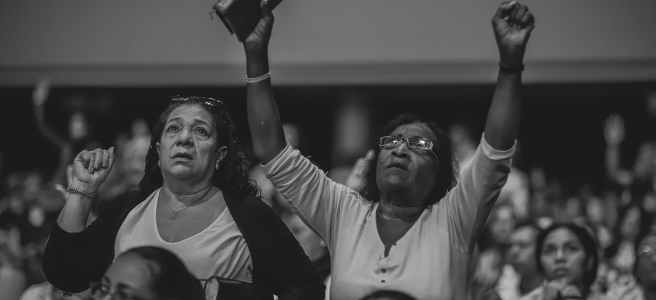
Prayer is unavoidable. We are always praying. We are always giving expression to spoken or unspoken, conscious or sub-conscious hopes, longings, hurts or questions.

Specifically, prayer is the essential, basic and transformative practice that followers of Jesus the King must engage in if they are to even begin to truly participate in the life of the kingdom. There seem to be different levels or modes for this.

  • At one level, prayer is all about personal sustenance and devotion. Whether this looks like a desperate plea for God’s presence, power, transformation, rescue, and deliverance, or a disciplined habit that trains and forms me in the shape of Jesus.
  • At another level, prayer is about communal development and formation. This could look like a simple shared practice where we support one another on the road of discipleship, or like an intensive and rigorous programme of activity to collaboratively pursue dynamic change in a community.
  • At another level, prayer is about societal transformation and revival. This could look like quiet, gentle and empathetic longing for the local and global state of affairs to shift in God’s time, or a public protest march calling on God to judge, heal & revive society.

All three of these modes of kingdom prayer ask for, plead for, work for, long for, seek for the transformative presence of God. In my personal space. In a shared community space. In my neighbourhood, city, nation or indeed the world.

All three modes of prayer pray the same three words over hearts, communities and societies: Come. Lord. Jesus.