
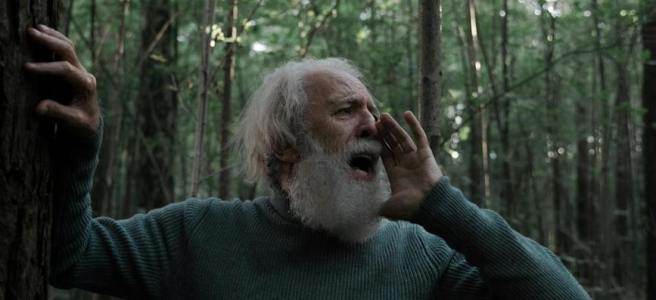
spirit direct my tongue

Lord, open my lips, and my mouth shall declare your praise. (Psalm 51:15)

However and whenever I use my tongue, I am increasingly away of the need for my speech to be spirit-directed. There are a few categories of spirit-directed speech that are useful to recognise:

spirit directed proclamation

Whatever form or format the proclamation takes, be that preaching in a church, directing a film, or designing an image for a billboard or Instagram (and I don’t ever expect to do two of those four!), there is a stark difference between engaging in those tasks with a mind and heart full of self, or filled with Spirit.

spirit directed conversation

Whether it be the most gentle listening and coaching, or the most urgent and heated must-have dispute, again, there is a clear distinction between the Spirit directing me to speak words filled with truth and grace, or my ego directing me to speak words filled with half-truths, defensiveness, insecurity and manipulation.

spirit directed prayer

When I pray, I may use a prayer book, I may let my mind chase the Spirit’s heart with unplanned words, or indeed I may silently speak to God in the quiet space of my own mind and heart. In all of those ‘modes’ I can either be led by the fear and pride that flows from ego and flesh, or I can be prompted or awakened by the Spirit enabling me to read, pray or meditate along the lines of love, humility and courage.

spirit directed tongues?

I have no personal experience of what most people call tongues. But even with my lack of experience (and putting to one side the exegetical interpretive questions I can hide within) I can imagine that whatever kind of speech that is borne from the movement of my tongue, be that a) a spontaneously and miraculously given and previously un-learned human language, b) a humanly-unintelligible angelic language, c) wordless groans, or d) a simple, humble and playful kind of free vocalisation offered to a Father by a child seeking an encounter that transcends rationality, it is the Spirit that makes such speech edifying or selfish.

Lord, open my lips, and my mouth shall declare your praise. (Psalm 51:15)

the king and the parent

As the theologically-astute preachers’ line goes, “If you want to know what God is like, look at Jesus.” When it comes to the Lord’s prayer, we are not so much looking at as listening to Jesus. He speaks of God as “Our Father”. God is just ‘like’ a Father, God is a Father.

Much has been said about how it is virtually and psychologically impossible for our human experiences of fatherhood (and motherhood) to not colour the way we understand and experience our relationship with our heavenly Father.

For those of us who have the privilege of being parents ourselves, this dynamic divides into two: We experience parenting ‘upwards’ and ‘downwards’. And both experiences colour us.

Positively we may be able to remember wonderful moments where our parents imprinted us with God-like love. And we likewise may have managed to have supremely divine moments where we were conscious of participating in truly loving parenting to a child of our own.

Negatively, however, our ‘upward’ experience of parenting in various ways can be a source of wounding as we recall various times that we were under-parented or over-parented, manipulated or abandoned, spoiled or abused.

Likewise, our ‘downward’ experience of parenting can provide a steady diet of shame as we fail, again and again, to live up to even our own limited standards of what a good parent should look like, and see the disappointment in our child.

In short, upwards wounds damage our trust in our parents, and downward shame damages our trust in ourselves. It is psychologically hard work, shall we say to trust God when our trust in our parents and ourselves is broken. We may scan the Bible and find stories that seem, especially when disconnected from the scriptural metanarrative and interpreted in the counter-narrative of progressive secularism, to show a God acting in ways that are wounding.

Back to Jesus we must go.

Jesus shows us not only how to truly see the loving Fatherhood of God, but also what it looks like when a Son fully trusts and enjoys that fatherhood. Jesus shows us a Father that is just, for sure, but radically merciful and self-sacrificing. A God who can be trusted.

I cannot run (my) life

I have concluded that I have more thoughts going around my head than I can properly manage.

And I am learning to be more and more OK with this, since I believe that I was never meant to be the sole Manager of reality as I imagine and perceive and think about it.

Let me elaborate.

I will not bother trying to explore the differences between animal sentience and human consciousness. In brief, I am happy with the concept of the sudden emergence of human consciousness into the world. I’d liken it to the process of starting a fire by rubbing a stick – think of Chuck Noland in Castaway. The fire doesn’t emerge out of thin air, but in the specific context of wood rubbing against wood, friction, heat, flammable materials placed in perfect proximity. Behold – fire!

Humans do this thing called ‘metacognition’ – thinking about thinking.

It is just too much for us to bear.

My tiny, tired mind is filled with thoughts about justice, ethics, politics, philosophy, scripture, religion, the psychology of the guy next to me at the cafe rudely watching videos with the sound loud and proud distracting everyone, renewable energy, slave labour that is also child labour in the cobalt mines of Congo, all of my arrogance and hubris, just how did Palpatine ‘somehow’ return in The Rise of Skywalker, why Star Wars fans can be so fickle, the possibility which is probably more of a certainty that I am over-reacting to what that person said the other day, my deep sadness at the state of my workshop, and the best way to solve the problem of…

You know what I’m talking about.

I am convinced that I am not equipped with the resources to sort out reality. It’s just not my job. Things don’t happen as I imagine that they should – and that’s only talking about my own life, let alone the mysterious fantasy that we call politics and government.

Oh sure, I’m not suggesting that I’m only good for doing one small thing, like woodworking (although what a sweet heaven on earth that would be indeed!). We are, I believe, made to roll up our sleeves and get involved in the world – yes even politics for souls better and braver than I.

But there is a fundamental difference in posture toward life, which I am seeing a bit more clearly.

On the one hand, I can try to have a God-like awareness and judgement over all things, and then get really sad, depressed, blah, or worst of all really angry and enthusiastic about it all not going how I know it should… (And God knows we do this…)

Or on the other hand, I can trust that God understands it all in a way that is at least a half-step ahead of my own reckoning – or more truthfully as far above my own understanding as can be imagined. And from this posture of trust – I can partner with God to do the small or medium or even large things that I am called to do.

In short, I cannot manage all the ideas I am so unfortunately capable of getting myself tied up in knots about.

Thank God that I can hand it all over to the One who can.

final salvation – the meaningful middle

When it comes to the ultimate future for humans, there seem to be two extremes.

One extreme would be the most hopeless and bleak form of materialism. Not even the faintest form of vague spiritual continuation of ‘me’. Just cold meaningless death. The brutal transition into non-existence.

The other extreme would be the most indifferent and indiscriminate form of universalism. Not the least bit of justice or varied reward. Just heaven for everyone regardless of what evils or genocides they committed, or what visions of the afterlife they even wanted.

In the middle is the complex but meaningful reality of faith. We are accountable for our actions. Trusting in God matters. The posture of my heart matters. Not everyone is simply lumped into one fate. There is room and space for a real response to God’s acts of creation and redemption.