
refuel, release, reconnect, relax

I was thinking about the acronym H.A.L.T. (Hungry, Angry, Lonely, Tired) today.

This is an acronym that use used and cited frequently in contexts that are about life-improvement. Mentoring, coaching, supervision, and counselling. The idea seems to be that being unaware of how I’m feeling sets me up for various kinds of unhealthy life patterns. For example: if I find myself particularly triggered by something someone said to me, it may be related to me motoring on through the day not realising that I forgot to have lunch Or if I’m not particularly motivated around my work today, I may be lacking connection with other humans.

It should be obvious that it is a good thing to recognise and respond accordingly when I am any combination of Hungry, Angry, Lonely or Tired. There is everything right and nothing wrong with this acronym.

But I tend to use it in as a reactive diagnosis.

It’s all well and good to be able to reactively diagnose my behaviour in the past-tense by linking it to my unawareness in the past-tense of how I was feeling. What I really need are habits of being that keep me from getting into these states of unaware un-wellness. I want and need to be spiritually proactive rather than cleverly reactive.

How do I have a way of life (or a ‘rule of life’) that will guard against me being Hungry, Angry, Lonely or Tired?

I can practice the fulfilling opposites of those dysfunctional states. I can develop and maintain:
1) a regular pattern of eating,
2) an ongoing practice of processing and letting go of anger,
3) a frequent custom of social interaction,
and 4) a dogged commitment to times of rest.

I can learn, on a continual basis, to:
Refuel my tank (and not get Hungry),
Release others from my wrath (and not grow Angry),
Reconnect with humans (and not become Lonely),
and Relax my body (and not get Tired).

If this is sounding a bit like a cheesy book-turned-movie like Eat Pray Love, I think I’m OK with that, because those are, regardless of how they might be framed in that book or that movie, good things.

Living a lifestyle of this kind of discipline is not complicated, but various challenges can make it… well… challenging.

A wealthy, upwardly-mobile, business-type person could find that:
meetings crowd out lunch,
high pressure situations don’t allow for on-the-spot forgiveness,
endless emails and report-writing isolate me from colleagues
demands of family mean there is ‘just no time’ to rest

A less-wealthy, less-mobile person with less-choice could also be faced with realties like:
they cannot afford to eat properly
they live in a conflict-ridden, war-torn context, fearing for life, with a long-list of real enemies and justified resentments
they are forcibly isolated from human contact or loved ones
they have to work 80 hours to feed their family

I don’t have anything but empathy for the latter of those two.
But for those of us whose lives are more like the first, there is possibly more opportunity and choice than we admit.

If…
I want to avoid states of low-wellbeing where I set myself up to not flourish…
then…
I need to set myself up to live well.

I need to be spiritually proactive instead of cleverly reactive.

I need to refuel, release, reconnect and relax.
true treatment

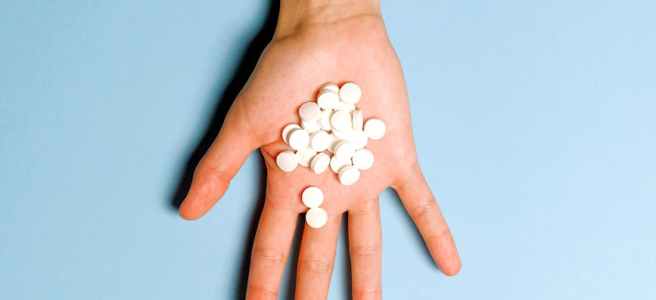
Maybe you are, specifically, an alcoholic. Maybe, like the rest of us, you can identify (a little or a lot) with the language and experience of addiction to some-‘thing’. Here’s something of a progression of how we become aware of our patterns, and how we can find relief and recovery from them.

1 The ‘thing’ is an effective ‘treatment’ – until it isn’t

It may sound odd to speak about alcohol as an ‘effective treatment’ for alcoholism, but in a very important sense this is true. At least for a certain period, a drug (alcohol, cocaine, work, sex, food, etc.) does something for you at some level. Whatever your ‘thing’ is, it treats the addiction, or you wouldn’t do it. You wouldn’t stay late at work every day (neglecting family, your own needs, etc.) if it didn’t provide the desired effect – which I’m guessing is increased income, a jolt of feeling like you are smashing out tasks and carrying the business on your shoulders, etc. You wouldn’t do drugs if they didn’t give you a hit. You wouldn’t look at inappropriate content online if it didn’t provide an escape. You wouldn’t go on food binges unless you got a hit.

The sad reality of addiction is that it is progressive. We need more of the ‘thing’, or stronger versions of it, to provide the same surge of energy or the same numb-out escapism. The drug works – until it doesn’t. It’s an effective treatment – until it isn’t.

Sooner or later, the ‘treatment’ for the addiction is accompanied by side-effects. We notice that our life is affected and that the ‘thing’ is not only failing to provide what it used to, but that our use of the ‘thing’ is succeeding in providing negative circumstances that we don’t want. We decide that we want… or need… to stop.

2 Merely ‘abstaining’ leaves me with un-treated addiction

The difference between addiction and non-addiction is that the non-addict can succeed in staying stopped, or moderating their use such that the side-effects are managed or eliminated. You are not an alcoholic if you can stop drinking entirely, or if you can keep yourself to 1-2 beers every time you drink.

The addict, however, has a tragic problem of not being able to stop or moderate. They may be able to stop for a time, but eventually give back in. They may moderate a time or two, but regularly lose control over the amount.

There’s another difference however that is crucial.

When a non-addict stops using, they feel better. When an addict stops using the thing they crave, they feel horrible. This is called withdrawal, or being in a state called ‘dry drunk’. You may not be using, but you are just gritting your teeth waiting to. Here is the territory of slips, relapses and falling over again.

Addiction demands to be treated – one way or another. The question is: what do you do when the using that used to treat it no longer does, and the abstinence from using doesn’t seem to work either?

Here is the sweet spot that brings people to their knees. They feel they have no direction to go. The drug threatens to kill them via drowning, and abstinence threatens to kill them via dehydration.

3 Knowledge is an ineffective treatment for the addiction

A very attractive pursuit for many who are struggling with addiction is the pursuit of more and more knowledge. Books on addiction. YouTube videos. TED talks. Articles. The idea here is that knowledge is power, and ignorance is weakness. If I’m struggling with addiction, it must be because I don’t know enough about my addiction. Perhaps I need to learn how my childhood trauma has made me a workaholic. Maybe I drink because of this or that. Or maybe I can learn more about how addiction is managed through avoiding triggers, or keeping myself safe.

Here again the distinction between addict and non-addict is key. A non-addict can indeed stop with good reason and good knowledge. They get the tools and use them if needed. And the tools work.

But for the addict, they may have all the tools in the world, all the good reasons to stop, all the life-hacks and strategies, but they just go back to it again and again.

4 Spirit Power is the true sustainable treatment for addiction

12-step spirituality insists that what we truly need is a Higher Power.

The idea here is that instead of fighting the addiction directly via will power or mind power, I surrender to complete defeat and instead commit myself to a course of action (the Steps) that put me in touch with Spirit power.

I set myself on a course of action that involves desperation, surrender, trust, introspection, confession, willingness, restitution, discipline, prayer and service.

And as I progress on this course of action, I suddenly notice that the addictive obsession and compulsion have been sidelined. I am so concentrated on trusting God, cleaning house, and helping others, that my problems are dying of neglect.

This is not ‘curing’ me of addiction as though I could never go back to using.

This is what it means to recover, and be recovered, from the addiction.