At least my original home… I’ve lived almost as long in Aotearoa NZ as I did back home in the USA… This has me thinking about place and presence. And this, in turn, has me building a mental taxonomy of the different kinds of absence.
The choice between absence and presence becomes manifest at Christmas.
I Can’t Be There
One type of absence is simply about physics. As much as I might like to, science won’t let me be in Birkenhead, Auckland, New Zealand and Bolivar, Missouri, United States – at the same time – for Christmas.
This kind of absence is kind and regretful. I give my apologies and excuse myself. It’s also very practical, as in, “Don’t include me in table-setting numbers.”
I Won’t Be There
There’s another type of absence that is not about physical possibility but perceived propriety. It’s about judgment. I am constrained not by physics, but by ethics.
After the 2024 re-election of Donald Trump, a phenomenon called “Boycotting Thanksgiving” happened, where people would protest both his re-election and family members who voted for him by absenting themselves from family Thanksgiving gatherings. Trump support trumps family relationships..
Ironically, boycotting your family at Thanksgiving for doing politics wrong reminds me of the Exclusive Brethren (Plymouth Brethren Christian Church) practice of ‘shunning’ your family for doing religion wrong.
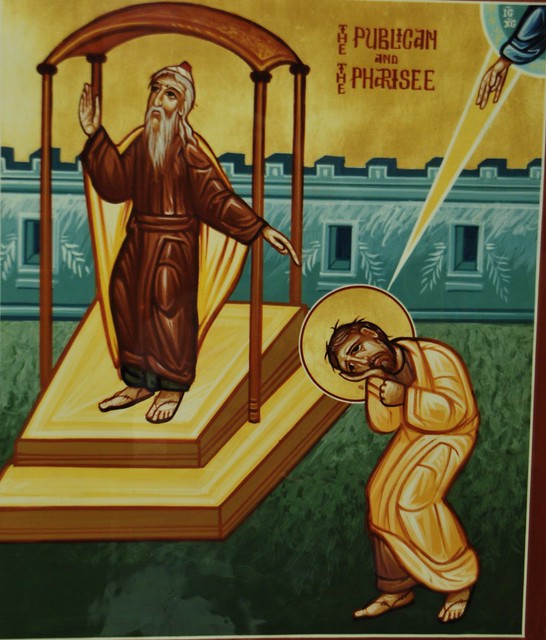
This kind of in-your-face face-turning has many forms. ‘Snubbing’ or ‘blanking’ is famously pictured in The Sneetches by Dr. Seuss. The Star-belly sneetches, knowing themselves to be superior to the Plain-belly sneetches, “saunter straight past them without even talking.” It’s the same posture as the hilariously exaggerated arrogance of the Pharisee in Jesus’ parable where he thanks God he is not like the tax-collector (Luke 18:9-14).
This kind of absence is passive-aggressive and judgmental. I toss the hand-grenade over the wall and it explodes with the message that reads, “I won’t be around that person.” I protest the presence of ‘that person’ by excluding myself from the gathering or denying them the dignity of eye-contact.
You Can’t Be There
The third kind of absence is about safety. And that makes it really tricky…
Safety is really important – obviously. For example, on the one hand, we need to reform our approaches to crime and incarceration, but on the other hand, the fact still remains that at least in specific situations some humans need to be kept away from other humans. But safety is different from what is sometimes called safety-ism…
What concerns me is when this kind of extreme language is used of much more ordinary situations. When ‘safety’ language is used to describe situations that are not truly dangerous, but about difference of opinion and clashes of personalities. Even more concerning is when such ‘safety’ language is used to justify excluding people from spaces.
Human spaces like churches, volunteer organisations, workplaces and sports teams will always have challenges, because of the humans that comprise them. But being ‘difficult’ is not the same thing as being ‘toxic’ or ‘unsafe’. It’s one thing to need some time-out in a situation, or put a time-limit on a conversation. There are a thousand ways to stay present with ordinary difficult people rather than excluding or rejecting them.
This kind of enforced absence can feel authoritarian. In the name of virtuous protection, it points the finger and says “Yep exclusion may sound rough, but that’s exactly what you deserve.” It imagines itself as rescuing victims from persecutors.
I’ll See You There
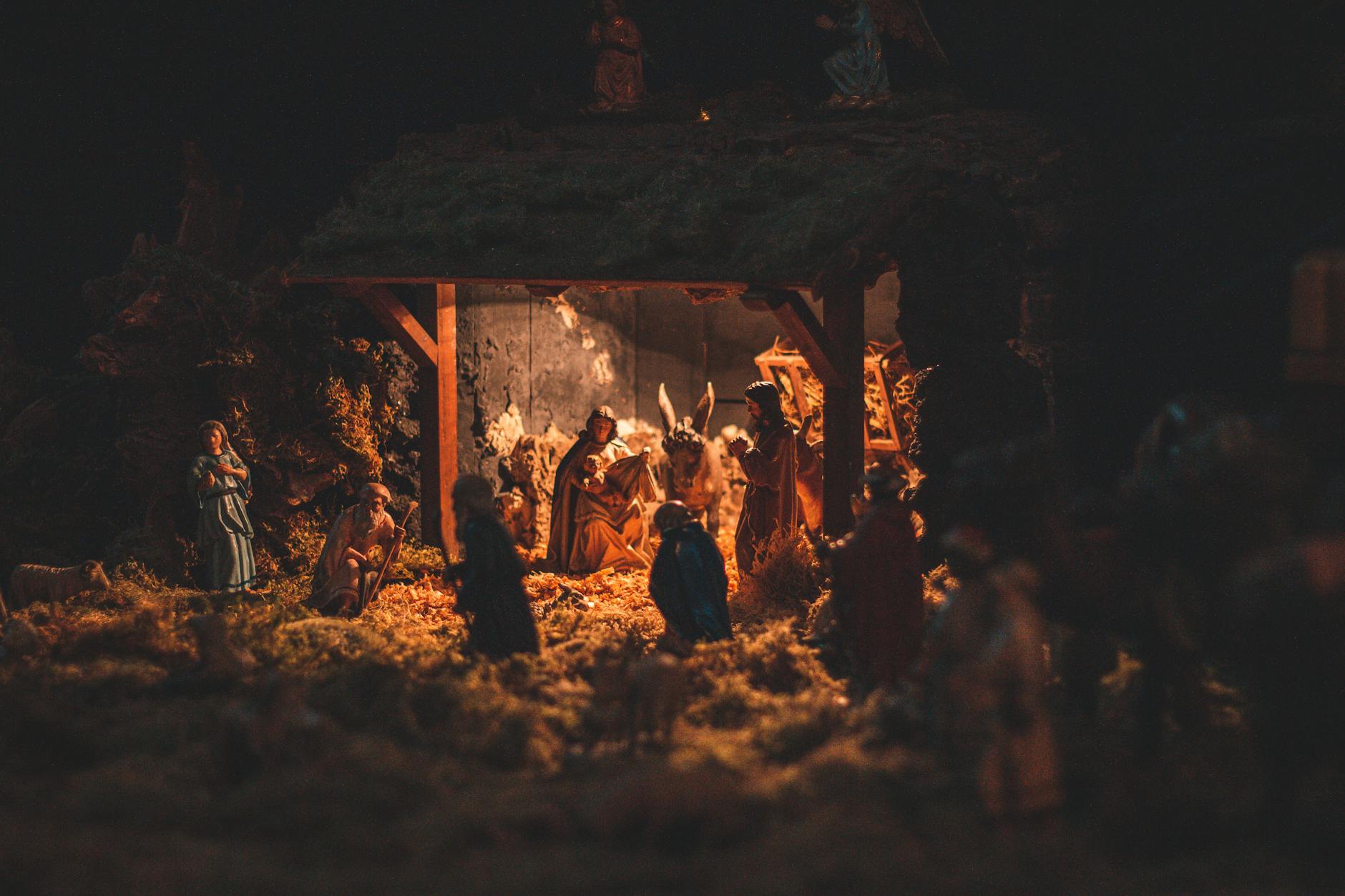
By contrast, Advent and Christmas is about the God who is omni-present (present everywhere) becoming uniquely and locally present in the person of Jesus Christ. The Creator whose presence surges through the cosmos in a way that electricity can only dream of, who never ‘left’ the creation, majestically ‘arrives’ within and connects to the the creation, to the earth, to humanity, to the nation of Israel, to Mary the Theotokos (the God-bearer).
This is the God of Scripture who promises his unique presence (described by rabbinic tradition as Shekinah) in various ways, times and yes places. It’s the God who walks in the Garden, meets on Mountains like Sinai, dwells between the cherubim above the ark, and mysteriously descends to feed his people through Bread and Wine.
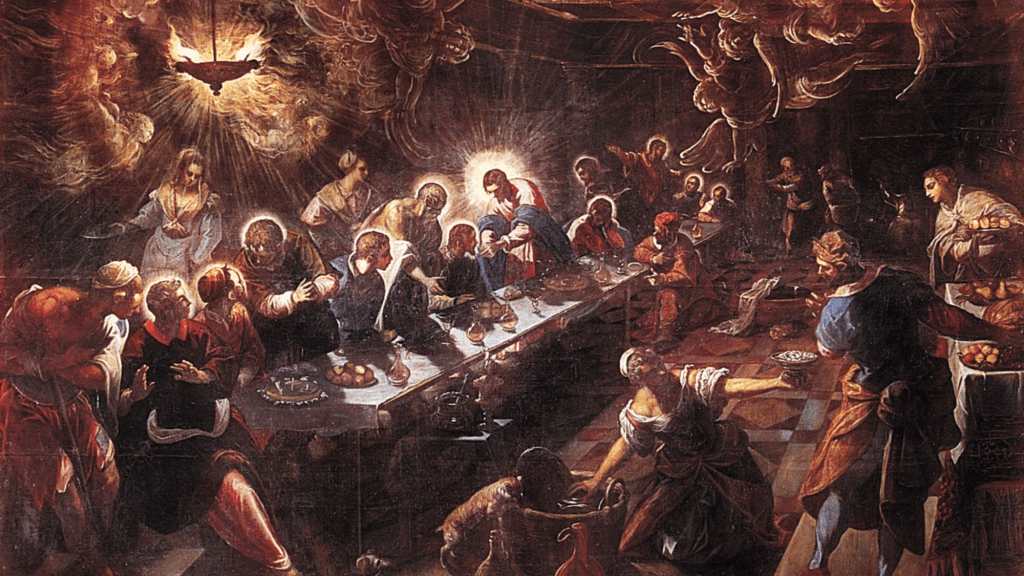
This is a vision of God whose cosmic presence is always a reality, but who will never coerce us to seek out, align with, and thus encounter and experience his local Presence. Christ is the Incarnation of a God who loves to welcome all who seek Him (including the ones we least likely expect to be looking for God). This is a Saviour who dines with the one who betrayed him to death. And who doesn’t flinch when religious leaders like priests, Pharisees and pastors exclude themselves from his presence.
It’s a God who is never ‘not there’. It’s a God who says ‘I’ll see you there.’
What does this vision of God mean for us this Christmas? It can mean as much as you dare to let it mean.
May it mean looking for the presence of God in those you are least likely to see it in. May it mean going to that dinner, that function, that space where ‘they’ will be. May it mean courageously seeking out that person you have cut off and extending an olive branch. May it mean eye-contact or even a hand-shake with someone you don’t really like.
May it mean forgoing the judgment of absence… And instead practicing the grace of presence.
The prayers, incantations, curses, blessings and healing practices found in the vast diversity of various indigenous spiritualities
Catholic spirituality which includes practices like adoration of the Host (flowing from a belief in Transubstantiation), praying to departed saints, etc.
The various occultic practices that are stereotypically ‘dark’ and engage in a multitude of ways with the unseen realm
Answer 1: They all believe that interaction with spiritual realities is a normal, every-day component of life in our time-space-matter world.
Answer 2: They tend to strictly separate spiritual from physical, except for rare interventions, which one of them denies entirely.
Short Reflection:
Contrasting these two lists is a bit of a cheeky attempt at framing things to make a point. Another way to frame them would be on a spectrum, from totally denying any/all spirit activity at one end, to some possibly harmful ways of being hyper-focused on spiritual activity at the other end. (For example, I would not want to naively accept every belief or practice reflected in the rather ad-hoc and vastly diverse collection of the first four.)
But it is worth noticing the binary. It’s a warning to people like me. The more I think and speak and act like naturalistic atheists or deists, the less vital my spiritual life will be.
Whatever negatives we may want to assert about any of the first four, the basic worldview at work is perfectly reasonable and resonant with vast human experience. A worldview that has at least these few points:
reality is not just physical but also spiritual
engagement with spiritual reality is not just for special rare occasions, but to be a regular part of life
Spiritual reality is not simplistically ‘good’ and pure, but also consists of spiritual realities that are good-that-has-been-corrupted, or good that is no longer good, or good that is curved in on itself, or good that has fallen into a state of malevolence. Or put simply: there are angels and demons. Good and Evil.
Taking evil seriously is directly referenced in the prayer that Jesus gave his disciples: “Lead us not into temptation, but deliver us from the evil one…”
The evil one does not tempt us in stereotypically obvious ways. It’s possible to be meticulously avoidant of any situations that could possibly lead you to anything even remotely resembling ‘demon possession’, whilst being naively unaware of evil’s sway in your life through ordinary things like viewing advertisements, shopping, avoiding people you don’t like, hundreds of ordinary fears and resentments, escaping from work with sensational travel experiences, etc.
The evil One, the great enemy, the adversary, the devil, the deceiver, the prince and power of the air, the Satan, Lucifer, and all the evil spirits or demons that exist – are rightly understood to be temporary, limited, permitted, defeated, destined for destruction, and in no way equal to the power and authority of the Good Creator.
(For a sermon for Birkenhead Community Church, 20 April 2025)
Resurrection Letter from Tertius
Grace and peace to you in the name of the Lord Jesus Christ. He is Risen!
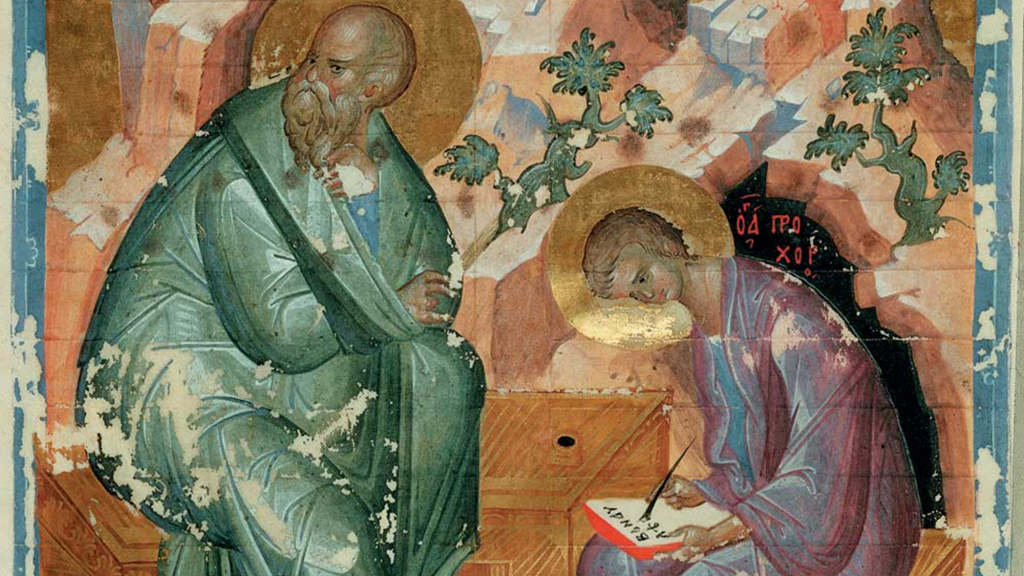
My name is Tertius. I’m a scribe – a letter writer – from the first century. You might remember my name and my greeting from the very end of a letter you call “Romans”. I scribed that letter for a well-paying, well-connected customer… who eventually became a dear mentor and friend. Known as “Saul” around his Greek contacts, we came to know him as “Paul” – the Apostle – a towering figure in the early church, though he preferred to speak of himself as a slave of Christ.
My name, Tertius, simply means ‘third’. Roman families often named children by birth order. First, Second, Third, Fourth… or Primus, Secundus, Tertius, and Quartus. The name ‘Quartus’ also features not far from my greeting in Romans. My name has taken on so much more significance for me now. It signifies so much more than my birth-order. It now points to my Master and Redeemer who was raised the Third day.
Paul and I wrote “Romans” while staying with the wonderfully hospitable Gaius in Corinth. And Corinth is where I am currently writing this letter to you. He tells me you did a sermon series a couple of years ago on the first of Paul’s two famous letters to the Churches at Corinth. So, you’ll be familiar with the ways in which the Resurrection collided with the philosophies and practices of Corinth… a fashionable new colony, full of pomp, athleticism, philosophy… and questionable sexual ethics!
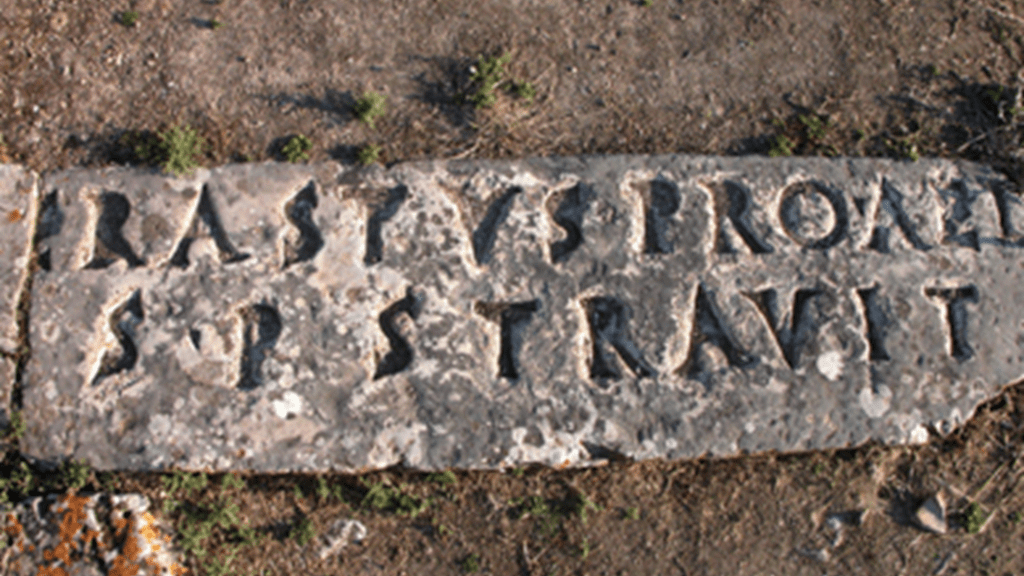
I’d worked as a scribe for a wide range of wealthy people at Corinth. One of these was Erastus, director of public works – like a treasurer for the city. It was significant for a believer to have such an important position… important enough for his name to be inscribed in various places at Corinth. Some of your archaeologists have found a couple of those inscriptions you can still see today. It was Erastus who recommended me as a scribe for Paul. Dale thought it would be helpful for me to tell you my experience of getting a grasp on – or should I say becoming grasped by – the Resurrection of Christ. I pray my words reach Dale in time for him to read to you on Resurrection Sunday.
Ancient scribes like me didn’t simply sit in a dark, candle-lit room with ink and papyrus. We travelled. We consulted. We socialised. This helped confirm details for the letters we scribed. Many of us were educated in rhetoric and had strong language ability.
When Paul employed me for his first major letter to Corinth, I was not yet a believer. Let’s just say, as someone with my level of Greek education, I raised my eyebrows just a tad as I transcribed his words about the ‘foolishness’ of Greek wisdom. I grew to know Paul as a man of deep love and compassion, but he was not afraid of robust dialogue! And I grew to understand that Paul had a surprisingly impressive knowledge of the same philosophers and poets I’d learned about. He could quote, as he did at Athens once, the hymn to Zeus in one minute, and then be preaching the risen Christ in the next. See Luke’s second manuscript, which you call ‘Acts’ for more details, and to get a sense how intelligent Paul really was.
I was fairly familiar with the Jewish religion, but to be the best scribe I could be for Paul, I would need to learn more about this new sect. Paul suggested that I spend a fair bit of time getting to know the various networks of believers at Corinth. He probably had mixed motives… He knew I’d be able to confirm the accuracy of all that was going on… but he also knew I’d be exposed to a community that just might change my life. And that’s exactly what happened.
The Christian communities at Corinth were mostly independent households who would regularly come together in various larger gatherings for special religious meals. Mixing with these communities for a few months, I experienced two very different groupings of people, with very different kinds of dinner gatherings… As I found out, you can tell a lot about people by the way they gather.
As a man trained in language and ideas, I initially gravitated to the more philosophically inclined group. They loved the Greek schools of thought, and eloquent speakers… That’s probably why they came to identify as the people “of Apollos” – one of the more prominent speakers in the early church. By contrast, they were thoroughly unimpressed by a comparatively rough, at times blunt, tentmaking Apostle like Paul. They thought his teaching about Resurrection was nonsense. What would it even mean to have a ‘body’ in heaven? As some of the great Greek thinkers had said, “a dry soul is best”. The soul “flies from the body as lightning flashes from a cloud.” You don’t really want, let alone need a body in the heavenly realms. So… Resurrection of the body felt strange. Unnecessary. Restrictive. Clunky. Even dirty…
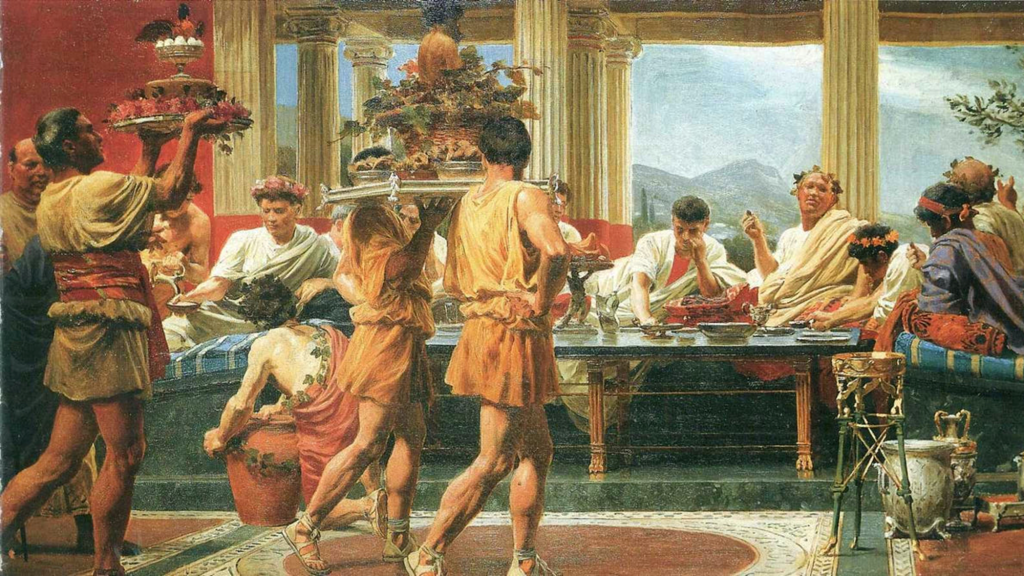
A typical dinner for these folks was luxurious and intellectual. The loftiest ideas – for those who could understand. The finest food – for those who were invited. Meticulous decorations. You folks might say it was “Instagram-worthy.” As in Roman symposia, the most important people were given the best spots. Servants kept every wine glass topped up and every plate loaded… whatever the guests wished for. I was well-familiar with these kinds of lavish gatherings composed of such cosmopolitan characters. This was the clientele I would often write for. They paid well.
A city like Corinth had plenty of hungry unfortunate folk… Their natural place was on the street… but having no understanding of how dinner invitations work, they sometimes would find their way into those gatherings… These sad folks were tolerated… permitted to watch… provided that they would not disrupt our proceedings with their sounds… or their smells… Someone told me about a beggar who wandered in months ago… he literally died of hunger. No ‘body’ in the gathering had noticed… Out of sight… and out of mind… in an adjacent room, he’d quietly fallen asleep… permanently. Thankfully, some of the servants of the house were believers and they tended to his body… though they gave his burial more time and expense than most would have thought appropriate…
The attendees at these gatherings were typical in their Corinthian-style immodesty and what we might call ‘ethical flexibility’. Controversially for many, the heads… and bodies… of some of the women… could frequently be uncovered… Many attending these gatherings could also be spotted taking part in proceedings at the temple of Asklepios… some even participating freely in the infamous after-parties, where more than food was on offer… “The body is for meats!” was a rationale which applied just as much to sex as it did to food. Such people latched on to some of Paul’s language about being ‘free’ in Christ… conveniently forgetting the parts about self-control and considering others… Such logic had one member proudly justifying a sexual relationship with their father’s newest wife… In Greek ways of thinking, matter didn’t truly matter. And apparently neither did the body. It was merely a temporary tool for attaining pleasure and status. A costume.
By contrast, the dinner gatherings of Chloe and her household were strikingly different. Chloe was a very successful businesswoman, and one of the early Greek women to join the way of Christ. She stood in a rich and fruitful line of leading Christian women – stretching from that early Resurrection morning by the tomb to now. Mary, Phoebe, Lydia, Priscilla, Junia and Chloe. And more… Women who changed the world. Chloe owned a number of olive groves and her oil was prized and distributed all over the region. Since following Christ, although Chloe’s business continued to be profitable, she was less motivated to maximise business success, and more interested in people, ministry and the Good News.
The social dynamic of her gatherings was something I’d never seen. And I’m not talking about the generous amount of Chloe’s premium olive oil at her table. I’m talking about the awkward, uncomfortable disregard for rank and status. Quite simply, there were no special guests eating special food in special places. Indeed, the only ‘special’ person at this meal was the risen Lord Jesus, who they insisted was present with them – especially as they broke a ceremonial loaf of bread and shared a cup of wine. More on that later… This dinner, with Jesus at its centre, seemed to be open to the whole world. It was for every… body. Glamourous bodies and disabled bodies. Rich and poor bodies. Jew and Gentile bodies. Male and female bodies. The altered or differentiated bodies of eunuchs. Every ‘body’ shared the same table…
In his letter, Paul had mentioned a number of people who were still alive who claimed to have seen Christ alive after his crucifixion. I was shocked to learn that two of them were part of Chloe’s household. Could such a thing really be true? If so, what did that even mean? How did it fit with the philosophy I was so arrogantly proud of? What was the significance of a single person being raised from the dead? What philosophical relevance did it have for the rest of us? And yet, this strange Resurrection philosophy was clearly animating these people… They were convinced, philosophically and practically, that the purpose of the ‘body’ was not directed at sex or food… but at serving the Lord and one another. It was clear that their future hope in the resurrection of the body was the motivation behind their concern for every ‘body’ here and now.
So different from the Apollos group! Instead of debates dominated by speakers, these gatherings were ordered. They prayed in turn. Read scripture. Chanted Psalms. There were moments for everyone to respond together as one Body saying responsive phrases like “Jesus is Lord” or a simple “Amen.” You didn’t have to be a scholar to participate. Every ‘body’ had something to give… and something to receive.
I’ll never forget meeting Chloe’s adopted son, who she had named Anastasios, which means ‘Rising up’. His body was a little small for his age. His thin legs were unconventionally angled. Others helped him with his meal. He thanked them and took his turn leading the gathering in prayer… speaking slowly but with definitive clarity. His tone and eyes radiated joy. Chloe had taken him in off the street – literally. He did not know his parents. You see, a practice that was common in the Roman world, which I have now come to detest, was leaving disabled or deformed infants ‘exposed’… to die… in a ditch. To have a body that was not ‘healthy’ was unfashionable for cosmopolitan Roman families. The resurrection of Christ, and the resurrection to come, had transformed Chloe’s mind. She valued lives and bodies that were unwanted…
Chloe would always introduce Anastasios as one of the teachers in the household. “He teaches us how to serve and be served. To give and receive. How to hope, believe, pray, and persist through suffering.” She meant every word. And she was absolutely right. God truly uses what we think of as ‘weak’ to humble those we think of as ‘strong’…
I began to see the true foolishness of the intellectual debates of the Apollos crowd, and the true wisdom of the radically counter-cultural Resurrection ethics of Chloe and her household. Their communal life embodied the Gospel. It was a letter to me… a letter I was learning to read… and a letter that was ‘reading’ me…
I had always thought that the values, ideas, and lifestyle I had inherited from Greek culture was so strong, wise, and glamorous. But I was now clearly seeing that they contributed to a world-system that divided people into those that mattered and those who didn’t… the strong and the weak… the valued and the worthless… the honourable and the dishonourable… the high and the low… the rich and the poor… the successful and the forgotten…
The comfort and living of a select few was built on the suffering and death of many… The more time I spent with Chloe and her household, the more I cared about every ‘body’ my world-system was harming. I felt dead… trapped within the system. I wanted out. I needed to get free. I needed what Chloe and her household had. I needed everything their Christ offered and gave… I needed to be raised to new life.
One evening after the gathering, I spilled all this out in conversation with Chloe and a few others. She told me that in confessing this with my mouth, I had already begun to receive the new life I knew I needed. As they prayed for me, I felt waves of freedom, and purpose, and life flow into my mind, heart, and body. A new Spirit.
I was due to return to Paul with a report on my time, which now included news of my own conversion. Paul beamed with joy, and when I asked if he could answer my many questions he eagerly agreed. It turned out that writing that second letter with him provided us with a timely opportunity to continue our conversations to help me grow in my understanding.
The Resurrection really is the truth that holds all other truths. When Christ rose on the third day, the ultimate future of humanity and even the cosmos, walked out of the Tomb. The future had rushed into the present. His risen and indestructible body was the template for the transformation, redemption, healing, and glorification of the entire human person: bodies, brains, neurons, hearts, motives, wills, relationships – our entire selves will be made new.
All kinds of bodies will be glorious and free. Male and female bodies. Modified and mistreated bodies. Abled and differently abled. All bodies need freeing and healing. Resurrection does not mean the perfect male and female bodies look like Achilles and Aphrodite, or to use some of your examples Brad and Angelina. No. Resurrection will make you more you, not more like some generalised ideal from Greek or any other cultural imagination.
Just as Christ’s risen body still bore the wounds and scars of the Cross, so too our bodies will be redeemed to reflect – and heal – all the experiences, deformities, modifications, injuries and anything that hinders us. Our bodies will be liberated into glorious freedom.
The Resurrection also extends to every corner of the cosmos. New gardens, new cities, new oceans, new ecosystems, new solar systems. New stargazing. New moon-rises. New biology. New chemistry. New physics. New Creation. New Heaven. New Earth.
This ultimate future is to be anticipated now. Resurrection means we have work to do. Justice will reign in this this New Heaven and New Earth. Justice for every Body. We anticipate Resurrection when we work to feed, clothe, house and care for every Body.
And we practice our care for every Body when we practice communion.Communion is for every Body. It’s not a sumptuous meal with my best mates who are just like me. It’s not about ignoring others to have a private moment with me and God. It’s about practicing Common Union as one Body.
And so, my sisters and brothers of Birkenhead Community Church, when you gather around the table of the Lord, do not feast like the world. Remember the Lord’s death. Proclaim his Resurrection until he comes again. Celebrate as one Body. Honour every Body.
Christ is Risen. He is Risen Indeed. Alleluia. In the common hope of Resurrection from the Dead, Tertius.
It is not easy to categorize it within Walter Bruggemann’s famous and immensely schema of orientation, disorientation and reorientation. It seems at times to simplistically state (as orientation Psalms do) that God protects the righteous and judges the wicked. But it also acknowledges the present reality of injustice (like disorientation Psalms do). It also looks forward to a time of reorientation when ‘you will see’ with your own eyes the downfall of the wicked.
The Psalm comes from a seasoned David who has seen how justice and injustice play out. He says in verse 25, “I have been young, and now I am old.” Here is David who has learned the wisdom of the ages that simple retaliation and vengeance only does more harm. He packs this wisdom into two lines in verse 8:
Refrain from anger and turn from wrath; do not fret—it leads only to evil.
We live in a season of human history where culture seems to be really keen on speaking out against oppression and injustice, rooting out aggression even at the microscopic level. This, as I’ve said countless times, flows from a good and godly impulse that rightly judges and wants to respond righteously to evil, oppression, aggression and anything that harms.
Elsewhere in the Psalter, David will join in this justice party. Heck, he has plenty to say about injustice in this Psalm. The wicked borrow and don’t repay, while the righteous give and lend from a posture of mercy. The wicked plot against the poor. Injustice is always economic.
But in this verse, he takes a different tone. People are sometimes concerned about ‘tone policing’. Don’t tell me to calm down. Don’t tell me I can’t be angry. But here David is policing his own tone. Or better yet, the wisdom that only comes from years of experience has affected his tone.
Embarrassingly, we see an aged David speaking as though to the hot-headed young social justice warriors, gently coaxing them to not get too upset about such upsetting things. “Yes all this injustice really is evil. But don’t be angry. Don’t fret. Don’t get tied up in knots about this. That will only lead to more injustice and evil. Their downfall is coming. Just you wait. Their own sword used to harm others will come back on themselves.”
This is holy week, and I preached last Sunday on the story of Judas. My theory is that Judas thought he was doing the righteous thing. He, like so many, wanted a military Messiah to make Israel great again. He would have been frustrated with a Jesus who rallied the people only to suggest that they would counter oppression by ensuring that they themselves didn’t participate in or mirror it.
And that’s the great tragedy of evil responses to evil. They are counter productive. Victims take vengeance against their oppressors and soon become oppressors themselves. Their own sword turns back to pierce their own hearts.
God’s way is different. He works in an un-timely manner, as far as we are concerned. He waits for evil to break itself. He waits for us to stop fighting and surrender to the reality that our swords, blogs, jabs, memes, pipe-bombs, or counter-strikes only make more evil.
The Scriptures tell us to wait on the Lord and for his justice.
Does this mean we do nothing? Just sit back and take oppression? Not at all. Jesus celebrates the persistent widow who pleads for justice against her adversary. But this woman had policed her own tone. It was passionate but not vengeful. It was persistent but not violent.
God save us from anger that makes things worse. Amen.
I think I believe two seemingly contradictory concepts.
On the one hand, I believe that God has made the world in such a way as to respond to and use our actions, including our prayers. Despite our preferences for a God as predictable (and controllable) as a machine, equally and lawfully distributing oxygen, planets, miracles and tsunamis, God sometimes seems to act like an interventionist genie, conjured up by profiteering faith-healers and televangelists. How embarrassing.
On the other hand, I believe that God is by definition the kind of being who is unchanging, eternal, and thus God will do what God will do no matter what. Whether we forget or remember to pray, a little or a lot, as individuals or in global concert, praying for vague blessings or specifically for things we are certain that the God of Scripture would approve of, God sometimes seems totally OK with being perceived as Richard Dawkins’ blind watchmaker. How disappointing.
To reference a couple of book titles by Pete Greig, the articulate and wise international founder of 24-7 Prayer, God is both the God of the shocking miracles of Dirty Glory, and the shameful silence of God on Mute.
How then, should we pray to this kind of God? We could make at least two errors.
On the one hand, we could pray our foot-stomping, confidently contending, passionately persisting prayers, dripping with biblically shameful audacity for God to break in act like an interventionist deity, and all the while forget to leave God any room to have a different purpose or plan than us for that situation. Tragically, we could do serious damage to our faith or the faith of others – all simply because we had a view of God that was not large enough to allow God to be both responsive and sovereign.
On the other hand, we could pray safe tidy prayers that cover all theological contingencies, making our prayers little more than self-referential pontifications pointed at God reminding him – and us – that basically we should remember to trust in his machine-like sovereign faithfulness over all things; all the while failing to have the prophetic imagination that God may be willing and postured to act from eternity within time in what we can only call a ‘response’ to something we pray. Tragically, we could fail to see healing of relationships or withered hands, or the confrontation of unjust systems or personal sin – all just because we had a view of God that was too arrogantly sophisticated to allow that God frequently does his work on earth through humans.
So then.
Let us pray with that strange and holy cocktail of deep assurance in a very large and unimaginably sovereign Father reigning over all things, and childlike urgency that can ask with unassuming and open-hearted expectancy for good gifts from the same sovereign interventionist Father.
God desires flourishing relationships in all possible relational directions between all entities – God, self, others, creation. In one sense, those relationships are really simple. God creates and sustains all things by eternal gift. Creation, crowned by the humans that image God’s generous love, share in the gifts and the giving to one another. In the swirling mass of relationships we negotiate every day, this perfect peace would play out at dinner tables, in restaurant kitchens, on crop fields, through international trade, in halls of politics and power, and alongside the neural pathways of each and every brain. Everything as it should be. Sounds nice.
But from Genesis 3, a fatal disease has been corrupting these relationships. And that disease is fear. I have a thesis that all fear can be framed as fear of loss. Everything we value – relationship, freedom, life, meaning – we fear to lose. This fear takes up residence in our minds and hearts and poisons all of our thinking, imagining, planning, self-protecting and wondering about life, our families, our friends, our work, our goals, the situations we inhabit. Fear drives us.
In some sense, it seems to be obvious that dealing with fear involves paying attention to and shaping my postures and attitudes towards the things I fear to lose. Perhaps Christian Scripture and Yoda (think Episode III – Revenge of the Sith) agree – I must Trust in the Lord and Let Go of everything I fear to lose. And it seems that prayer is the simplest and most effective tool we have for doing this work.
In Philippians 4, Paul gives some famously helpful guidance on how to pray. This guidance deals directly with the fear and anxiety problem we have in our relationships (and it’s interesting that he gives this guidance immediately following his discussion of an interpersonal conflict – a relationship needing some shalom – between Euodia and Syntyche). He writes:
4 Rejoice in the Lord always. I will say it again: Rejoice! 5 Let your gentleness be evident to all. The Lord is near. 6 Do not be anxious about anything, but in every situation, by prayer and petition, with thanksgiving, present your requests to God. 7 And the peace of God, which transcends all understanding, will guard your hearts and your minds in Christ Jesus.
Some observations.
Joy evaporates fear like light chases away darkness. It’s so important that Paul repeats himself.
The language is sweeping. When do I Rejoice? Always… Pray about what? Every situation… Anxiety? No, not about anything.
No specific ‘answers to prayer’ are promised here, but it is promised that my anxious heart and my obsessed mind are protected by ‘the peace of God and they can rest from fear and trying to understand whatever is happening.
One day, an expert in theological ethics went to Jesus to test him. “Lord… How do I live in such a way that it looks like I am a part of the people aligned with heaven?. What’s the just and righteous way to live, here and now?”
“Do you have a Bible?” he replied, “Give me your hot take on biblical ethics.”
“Well, Jesus, as you know the Bible is a big book, filled with a lot of stories and moments that people debate this way and that. And ethics is complex, man! My doctoral thesis explores this in detail… of course…” The expert’s sentence trailed off… [At this point Jesus looked at the expert with a kind puzzled look, wondering if he was actually going to answer his question or not…] The expert regathered himself and continued… “But sure… yes… a summary… Yes, I do think… when you read it as one story… an overarching metanarrative… and let the obvious parts function as a lens to interpret the hard to-understand parts… I reckon the basic message of the Bible is all about love. Love as far up as you can imagine – to the God of all creation – with all you have; emotion, identity, action and intellect; and love other humans because that’s how you’d want to be treated too.”
“Impressive!” Jesus replied. “Now those are some good theological ethics, right there. If you put those ethical theories into practice, my friend, you’re on the right track.”
The religious expert instantly felt threatened. He wondered why Jesus had said ‘if’ he put that into practice. Was Jesus suggesting that he maybe wasn’t already putting his theology into practice? He was a good guy. He had good ‘balanced’ theology, after all… Surely Jesus agreed with him, right? So, to make sure he was right, he asked another question. “But Jesus… it’s not really that simple, right? I mean, whose ethical interpretation do I hold to? Surely you’re aware how hard ethical debates can be. Especially with the internet and social media echo chambers splitting us into tribes? Each one thinks ‘they’ are right and the ‘others’ are wrong, you know? Everyone defines ‘love’ differently… It’s grey chaos and feisty angst out there, right?”
In reply, Jesus told this story: “One morning, a drag queen was going to their day job. They weren’t wearing their drag outfit, make-up and bling, but a group of frat boys recognized the drag queen. ‘Hey,’ they said to one another, ‘it’s that drag queen who’s been in the news.” Their blood vessels and brain synapses surging with testosterone and ego, they mocked and teased the drag queen, getting up in their face, yelling and intimidating. The drag queen pushed them away asking to be left alone. That was all the boys needed to begin mercilessly beating him. Four on one, it was no contest. They ran away laughing, leaving the drag queen in blood-soaked tears.”‘
“From across the street, a minister had seen the last few seconds of the encounter. He was from a church that had the word ‘Bible’ in its name, and he had also watched the news stories about this drag queen. He prided himself that he would have never been violent like those frat boys, but reasoned that maybe this drag queen would learn from this and reflect on their actions. Tough love seemed a fitting response. So he put his head down and kept walking, thanking God that he had not gotten himself into the kind of mess that this poor drag queen had.”
“Walking right behind the minister was a well-known MP for a very left-leaning party. She had an urgent and confident pace, and was wearing a rainbow pin as an expression of her allyship to rainbow folk. She was head-down in her phone and hadn’t even noticed what was going on. A conservative family member had posted something negative about (ironically) the very drag queen who lay bleeding across the road. She was sharing that story on her own page, with her own corrective comments, soundly demonstrating that she was on the right side of history. She walked onwards, totally oblivious to the drag queen who lay distraught just a few meters away…”
“But then,” Jesus continued, “a Muslim was walking behind both the pastor and the MP. He had been out for his morning prayers and had seen the frat boys do their worst. He’d already phoned for help as he crossed the road to attend to the drag queen. When he reached the drag queen, the Muslim greeted him, ‘Hello, brother. I’ve called for some help. Is it OK if I check your wounds?” The Muslim sat down on the concrete sidewalk next to the drag queen and put his arm around them, providing serviettes he had in his pocket to stop the bleeding from the drag queen’s nose and mouth. He sat with them until the ambulance arrived. On his lunch break the next day, he visited the drag queen in the hospital and helped them contact their other friends and family who were eager to visit. Without posting on social media, he also secretly donated a sacrificial amount to an organisation set up to care for people who are victims of things like crime or discriminatory violence.”
Jesus paused and then asked the expert in religion a question: “Tell me which of these three, the minister, the MP or the Muslim… which one loved the drag queen as they would want to be loved?”
The expert in religious ethics hesitated. He was not only well-read in ethics and philosophy, but also apologetics. He knew with exacting certainty why he was a Christian and not a Muslim… Finally he mumbled, “Well, I suppose you’d have to say it was the third one, who… you know… helped him.”
Jesus looked at him with compassion and said, “Yes, that’s the one, my friend. This difficult and challenging teaching I’m giving you now is about action. Action that shows your beliefs have travelled from your brain to your gut. Action that directly and practically helps. Not just having ‘correct morals’ to win theological debates… Not mere ‘performative allyship’ to show the Metaverse how loving you are… Action. Real, humane action. Real compassion. Go and do likewise.”
Here were my observations from reading Psalm 16 this morning.
“O my soul, you have said to the Lord, “You are my Lord…” Here David is talking to himself, or specifically to his ‘soul’. Not only this, he is talking to his soul about what his soul has talked to the Lord about. David seems to be trying to reach down to his deepest commitment to rekindle it, to tend the flame of faith. I think we are deeply committed to many things and don’t realize it? To looking good, to being successful, to avoiding this or that situation that we are afraid of, to trying to make the world a better place (according to the standard of the cultures reflected on our television, tablet, computer and/or phone screens). David here reaches into the deepest part of himself, and rekindles his deepest commitment to the deepest and most Ultimate Reality imaginable. The Lord.
“My goodness is nothing apart from You” Long before King Jesus the Son of David taught about abiding in the vine and declared that “apart from me you can do nothing” King David relativizes his goodness in relationship to God. David is going to be turning soon to talk about goodies (“the saints”) and baddies (people “who hasten after another god”). But before those reflections, he recognizes God as the one whose goodness enables, undergirds, defines and sharpens all goodness.
“The lines have fallen to me in pleasant places…” David has just reflected on the self-destructive result of idol worship. All the drinking blood and chanting of names cannot improve my life. Actually it makes it worse. It only adds a sense of futility to suffering: “Their sorrows shall be multiplied.” How different is the blood of the new covenant and taking the name of Jesus on our lips! But that’s for another post. Here we note the contrast of David’s gratitude. Because the Lord is his ‘inheritance’, he can enjoy and delight in his ‘lot’ in life.
“My flesh also will rest in hope…” This is the line just before he goes on to give those famous lines quoted in the New Testament (Acts 2) about his soul not being left in Sheol (the Grave). Rightly, like Peter at Pentecost proclaimed, the Grave is not the end for those who ‘rest in hope’. Christ is risen, the firstfruits of those who have fallen asleep. We will rise with him.
“At your right hand…”In verse 8, David has just talked about the Lord being “at my right hand”. Out of context, we might misunderstand this as David imagining God as a religious trinket, a little genie in his pocket, or a voice on his right shoulder. No. David knows that the Lord is the One whom the heavens cannot contain. But the transcendent God is also immanent: “at my right hand”. The one sustaining and fixing the very laws of nature, the ones we know and the ones we don’t, is the one who is close with us with the result that we “shall not be moved.”
I’m in the midst of running a project for work that involves around 50 or so people. It puts me in collaborative partnership with a filming studio, audio technicians, receptionists, just over 40 contributors, station content directors, and producers.
It’s going really well and I’m enjoying the process. No complaints of any real magnitude.
There have been the odd moment of something happening a way that I didn’t expect, didn’t want or didn’t plan for. Perhaps my enjoyment of the process is entirely due to my ability to process these little issues with acceptance.
I’ve been reflecting on acceptance. In my experience it’s easier to accept something when I know that I have absolutely no ability to control or manage it. If I feel even a bit like I can influence the outcome, I start to be a bit less accepting of the outcome being what I do not want. It’s worse when the ‘thing’ is connected to or reflects upon me.
Nobody would suggest that acceptance is the only principle to life one’s life by. If we accepted everything in the most literal sense, we would become entirely passive spectators in life. Never participating consciously, actively, assertively. We would be not living life, but watching life go by.
Too much acceptance can be a problem. But instead I’ve been reflecting on the problem of too little acceptance. It’s a problem when I try to control things that I should not try to control.
As the Ultimate Being who created, oversees and is redeeming all of Reality, God is by definition the most ‘in control’ entity imaginable. Christians, and all other monotheists, believe that not one quasar or quark pulsates without the power and permission of Creator God. And yet, God seems to have chosen to be (at the same time) the most ‘accepting’ entity. Christians believe that although God could force planets, persons and plant-life to do precisely as he wants, he nonetheless has chosen not to do so. God has given various kinds of real freedom to various kinds of created things.
I don’t believe that the shape of scope which the universe has taken is of any surprise to God, but at the same time, I believe that God has, without being in any way detached or distant from nature (I’m not a deist), not micromanaged every microscopic moment. Rather, like a Mother or Father, God loving watches over the thing which he has so lovingly and wisely created. Trees grow according to their genetic code, seeking sunlight and water. Each tree takes a unique shape. And yet each tree is playing by the same rules and restrictions. One doesn’t see a tree suddenly sprout forth a horse’s head.
Humans too, are free to choose, train themselves this or that way, to develop as they wish. And yet, we cannot fly. We can’t survive like fish underwater. We are not as strong as some animals. This freedom is from God.
So God is in control but not controlling.
God is the ultimate accepter.
At times, we try to control others in ways that God doesn’t. We must have convinced ourselves that God requires our help making the world the way he wants it.
And of course this too is not entirely wrong. God does delegate. God works, speaks, heals and rules through humans. But perhaps at times we need to remember to be a bit more godlike in allowing others to be and to do what they wish.
God does this constantly and on a breathtaking scale with humanity. Humans are always violating God’s will. We lie, cheat, and steal. And the God who is constantly speaking and wooing us away from such sins, nonetheless has chosen to be the kind of God who will not step in and force us to do the right thing. We are beautifully and tragically free.
God is the ultimate accepter.
And we too, must learn to mirror God in his longsuffering acceptance of others. Most of all when their choices interfere with my preferences and plans.
It doesn’t mean we never try to influence things. It doesn’t mean we can never have a leadership position. It does mean that, like God, we have to restrain ourselves from pushing others past a certain point.
In Matthew 6, Jesus gives masterful teaching about prayer. He understands with perfect clarity the way that our egos work as we relate to others in the world.
The usual form of the Lord’s Prayer that most of us know and use is a combination of the versions given here in Matthew 6 and in Luke 11. With this combined form in mind, Matthew’s version seems to end abruptly. And on top of this, the follow up teaching on forgiveness seems a bit late, coming after the final bit about temptation and evil. It can feel like the gospel writers (or Jesus) made a literary mistake and got the order of lines out of whack. Something like:
pray this way about forgiveness
and finally, pray also about temptation and evil
Oh yeah, rewind back to forgiveness, I got a tad more to say on that…
This apparent disorder vanishes when I recall that Jesus (and the gospel writers) were rather intelligent people, and when I recognise that unforgiveness is a very common, tempting, and evil tendency for humans.
Jesus, we must remember, is the one with the most important and accurate information on humanity. He knows precisely how our egos tend to judge others and justify ourselves. He knows this tendency is profoundly common, very tempting, and he rightly uses the language of ‘evil’ directly in the middle of it all. Positively, Jesus knows what how we must think, act, and pray to counter this. With the greatest urgency, we must learn, practice and keep practicing the art of being a forgiving person.
Jesus knows how natural it is for us to point the finger of judgment at ‘them’. Look at what ‘they’ did. He knows how quickly we assume that ‘we’ would not (indeed, could not) ever do what ‘they’ did. Jesus knows that if I insist that I could never do what ‘they’ did (to me or to others), then I don’t think I need the same kind of forgiveness that ‘they’ do. He knows how this self-righteous judgment blocks me from fully savoring – and sharing – the forgiveness that the Father so freely offers me.
So then, I can read these verses more like this…
“Forgive us our various kinds of sins, just as we keep on practicing forgiving others of their various kinds of sins. After all, do we not all stand in need of forgiveness, and could we not all see ourselves in one another? Keep us from being tempted away from forgiveness like this. Deliver us from the evil One who is the source of all blame, finger-pointing, gossip, and discord. Deliver us into the free and forgiving arms of You, our Father.” For this is how forgiveness works. It has to be shared to be experienced. Your Father is eagerly watching and waiting for us to get our hearts in a posture that can receive forgiveness and share it. It just doesn’t work any other way.











 Recovering the Kingdom