
God’s violence

The God we meet in the pages of the Old and New Testaments is revealed, I am convinced, as a God of love.

God is not – at heart – an angry violent God who occasionally needs to do the odd bit of loving and forgiving.
God is love, and sometimes love has to act through violence.

C.S. Lewis is not the only one to describe God as a God of delegation. God delegates his creational order to Nature. God delegates his rule of creation to the image-bearing humans tasked with tending and keeping the garden. God speaks through Moses, the prophets, preachers, and donkeys.

I’d like to document here two observations about some of the divine violence in the Bible. And in no way is this to pretend to have simplistic solutions to such matters. There is something tragic and mysterious about divine violence that we are probably supposed to continually wrestle with. I just think these are helpful perspectives.

  1. God uses imperfect and immoral human actors to bring his punishment. Israel understood their exile to Babylon as divine punishment for their evil and unfaithfulness. Babylon was not a picture of human flourishing. But Israel’s prophets understood the violent actions of Babylon as both allowed and used by God for their own punishment. Likewise, when Israel took the promised land, they were themselves not perfect. The point here is that God uses humans for this. God does not show up in person to do this violence. Direct supernatural intervention is rare. Usually in biblical conflicts there are natural events and elements involved, like water, wind, fire, storms, mud, thunder, frogs, etc.
  2. God expels people from places meant to be beachheads of peace, flourishing and shalom. This pattern starts in the garden, where Adam and Eve are expelled. When Israel took the promised land, it was full of people (Canaanites) who were practicing child sacrifice and violence – and were being expelled from the land. When Israel were later exiled, it was for the same evils of child-sacrifice, violence, idolatry and unfaithfulness. God wanted Jeru-salem (shalom – peace) to be a beachhead for peace. He wanted his people to be a light to the nations.

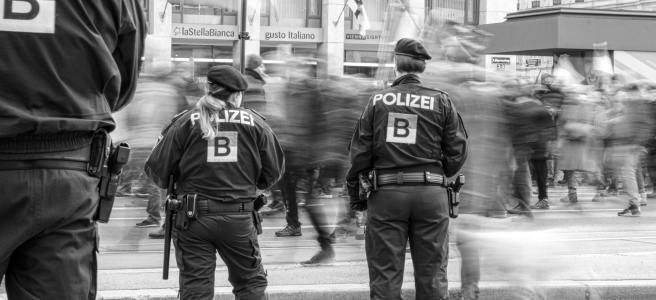
Human police forces and genuine peace-keeping of armies, are a helpful picture of God working through people who show up and hold space for peace to increase. God, then, seems to have a quite consistent purpose in this. To allow violence to collapse in on itself, and to advance peace on earth.

    Keen to hear others thoughts on these ways of thinking about violence in Scripture.

    peace through prayer

    The ultimate goal of God is shalom.

    God desires flourishing relationships in all possible relational directions between all entities – God, self, others, creation. In one sense, those relationships are really simple. God creates and sustains all things by eternal gift. Creation, crowned by the humans that image God’s generous love, share in the gifts and the giving to one another. In the swirling mass of relationships we negotiate every day, this perfect peace would play out at dinner tables, in restaurant kitchens, on crop fields, through international trade, in halls of politics and power, and alongside the neural pathways of each and every brain. Everything as it should be. Sounds nice.

    But from Genesis 3, a fatal disease has been corrupting these relationships. And that disease is fear. I have a thesis that all fear can be framed as fear of loss. Everything we value – relationship, freedom, life, meaning – we fear to lose. This fear takes up residence in our minds and hearts and poisons all of our thinking, imagining, planning, self-protecting and wondering about life, our families, our friends, our work, our goals, the situations we inhabit. Fear drives us.

    In some sense, it seems to be obvious that dealing with fear involves paying attention to and shaping my postures and attitudes towards the things I fear to lose. Perhaps Christian Scripture and Yoda (think Episode III – Revenge of the Sith) agree – I must Trust in the Lord and Let Go of everything I fear to lose. And it seems that prayer is the simplest and most effective tool we have for doing this work.

    In Philippians 4, Paul gives some famously helpful guidance on how to pray. This guidance deals directly with the fear and anxiety problem we have in our relationships (and it’s interesting that he gives this guidance immediately following his discussion of an interpersonal conflict – a relationship needing some shalom – between Euodia and Syntyche). He writes:

    Some observations.

    1. Joy evaporates fear like light chases away darkness. It’s so important that Paul repeats himself.
    2. The language is sweeping. When do I Rejoice? Always… Pray about what? Every situation… Anxiety? No, not about anything.
    3. No specific ‘answers to prayer’ are promised here, but it is promised that my anxious heart and my obsessed mind are protected by ‘the peace of God and they can rest from fear and trying to understand whatever is happening.

    sword & shield v. cross & towel

    All humans carry a sword and a shield.

    We strike out at and critique others with our verbal, philosophical, political, social or literal swords. We block and defend ourselves from criticism with our good intentions, mimising excuses, self-justifying reasoning. Our shields.

    It’s not that we should never defend ourselves, and I don’t know if we should be surprised that people and nations frequently want to have at least some kind of readiness to respond to violence. It’s just that the sword and shield become a way of being. They shape us into people whose tendency is to critique others and defend ourselves.

    This even happens within ourselves, psychologically. We divide ourselves into parts: parent / child, good / bad, the rebel / the law, or what have you… One part of us critiques the other part, and the other part defends itself. We don’t have to suffer from multiple-personality disorder to relate to the experience of feeling simultaneously innocent and righteous on the one hand and victimised and full of self pity on the other hand. It’s the sword and shield again. Just directed inward.

    Christianity offers a way of life where we trust God to be our sword and shield.

    We don’t need to take up the sword against others and sort them out. (Or ourselves.) God is just. (And merciful.) The biblical wisdom is that God almost always does this in his usual way – by delegation. Natural law, imperfect human governments, communal or relational systems. Injustice has its day, but eventually gets toppled. When we try to rush the process with our swords, we end up becoming what we hate.

    We also don’t need to overly defend or protect ourselves from critique. God is our fortress, tower, shield, and defender. The great irony is that when I live in the freedom of not worrying what might happen to me (gossip, violence, theft, you name it), those things don’t have any power over me. I trust that God will deal with them as he will, and when he will. Ultimately, the biblical narrative promises a final justice that will heal all wounds and restore all things. I can choose to take comfort in that.

    Christ – at Christmas and at all times – comes to us asking for an exchange.
    He wants our swords and shields, and offers us a cross and a towel.

    I am offered a cross. An instrument of death and violence to myself. I am not expected to do what Jesus alone could do – atone for the sins of the world. I am invited, expected or even commanded to follow his way. To ‘take up my cross and follow’ him. To live sacrificially is not the way of self-loathing – constantly criticizing, punishing and judging myself. As the cliche truth goes, it’s not “thinking less of myself, but thinking of myself less.”

    And this leads to the towel. I am to become a servant. Not a show off servant. Not “Hey everyone, I’m just going to pick up this piece of rubbish… aren’t I a great person….” Not “Hey everyone, look how pissed off I am about social injustice… I probably hate oppressors more than anyone I know…” Not this. Real service. Service that can go unnoticed. Uncelebrated.

    The world is full of divided politics, communities, families and selves. If we’re honest, we’ll be able to see how we participate in wleding the sword of criticism, and raising the shield of self-justification.

    The world needs more cross bearers and towel servants.

    That is precisely what Jesus taught and modeled. It is his plan to bring his kingdom where needs are provided for, sinners are forgiven, and humans live in grateful peace.