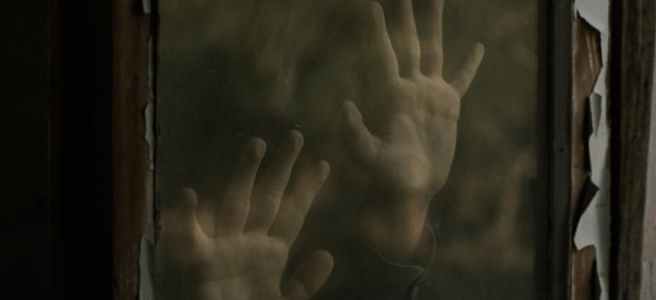
praying to move the Mover

In Luke 18:1-8 we get the “Parable of the Persistent Widow”. It focuses on her persistence to win justice against her adversary. All parables of Jesus have a point, but here we are told the point of this one from the start: to show disciples that we “should always pray and never give up.”

I’ve been saying for years that when we pray we shouldn’t think of God like a vending machine. The differences should be obvious. A vending machine doesn’t care about us. It doesn’t make decisions about what we need. It is created by something other than itself. It will eventually wear down and fail to work, operate, provide, give or respond.

But here I’m going to explore at least one characteristic of vending machines which bear at least some kind of likeness to God. That characteristic is that (provided they are not defective) they work. They operate. They provide. They give. They respond to our requests.

Vending machines move. You put the money in (coin, cash, card, or

Aristotle, observing that objects in the world are in motion, rightly reasoned that (pardon the redundancy) there must be a necessary being that is a) not itself in motion, but b) is itself responsible for all of the motion in the world.

Some would at this point want to jump in and point out that this leads to (or is) a ‘deistic’ view of God. A God who kicks off all the motion in the world and then sits back and does nothing else ever again. Just one big shove, and done.

Despite this being perhaps where our minds may go first, it doesn’t mean we have to imagine things like that. As in a pool or billiards table, instead of imagining God as the white cue that is hammered at the other balls and (we might imagine) immediately removed from the table after that first contact, we might also imagine God as the cue stick, or better yet as the player who is active both beyond and on the table throughout the whole game. The one calling all the shots.

Theologian C.H. Pinnock proposed that God is not just an ‘unmoved’ Mover, but rather the Most-Moved Mover. Unlike a deterministic deity with a fixed plan like clock-work, Pinnock had an ‘open’ picture of God’s sovereignty which we won’t go into here. Suffice to say that the Bible does not portray God’s sovereignty in such a way that conflicts with our experience of God ‘changing his mind’, feeling sorry that he made humans, or responding to prayers.

This brings us back to the teaching of Jesus, using the example of a pleading widow to teach us to “always pray” and “never give up.”

According to biblical theology, God has chosen to be the kind of God who wants to relate to us, and wants that relationship to be one of asking. Jesus, as a master teacher who knows human nature completely, clearly knows that we will get tired of asking and want to ‘give up’.

The short parable ends with Jesus concluding that God, who we should understand is very unlike the ruler who “doesn’t fear God or care what people think” is the kind of God who will, in his own time and own way, “bring about justice for his chosen ones, who cry out to him day and night.”

I don’t naturally want to cry out to God day and night. Not for anything. I find the deistic view easier. God has determined it all. Down to the last detail. No need to give him instructions. Just trust and wait until the end, when it will all get sorted out.

But no. This parable shows God to be the kind of God who wants us to be – at least a bit – impatient and persistent with him. He wants us to “keep bothering” him, like the widow did to the unjust judge. God wants us to ask for at least a little of the ultimate future in the immediate present.

This will take practice, and getting over our pride which doesn’t want to look like a fool asking God for stuff all the time and it seeming (at least some of the time) to make precisely no difference.

If we go to the Psalms, the prayer book of the Bible, the prayer book that shaped Jesus’ prayers, we immediately see this kind of view as they call persistently on God for all things, all the time, in all kinds of ways.

In prayer, I have the shameless audacity to be trying to move the Most Moved Mover.

the birds helped me to pray

Today the birds helped me to pray.

My slowness to rise after my short six hour slumber was gently challenged by the relentlessly positive chorus of glad chirping from the other side of our bedroom window.

(The contrast between this happy throng and the pair of brutally barking dogs a few weeks earlier could not be overstated.)

They helped me pray my regular daily ‘Our Father’ at my dedicated place and prayer kneeler.

Our Father, who art in Heaven,

Yes, you are beyond this world, and also in it. You’re in the throat of those glorious birds.

Hallowed by Thy Name…

Yes, may we honour your name as freely and ornately as these simple creatures are.

Thy kingdom come, Thy will be done, on earth as it is in Heaven.

Yes, the celebratory proclamations of these winged friends is an earthly echo of angelic praise in the heavenly realm beyond our sensory comprehension.

Give us this day our daily bread.

Yes, you “feed the ravens when they call to you.” Feed us too, and may we not fight over the crumbs as these little friends are sometimes known to.

Forgive us our trespasses as we forgive those who trespass against us.

Yes, these animals are not worried about anything. Childlike, they watch, explore, hop, flutter and gladly receive nourishment. They do not hold grudges, despair over the sad state of things. May I not miss such simple gratitude in the midst of all my serious political philosophy.

And lead us not into temptation, but deliver us from the Evil One.

Yes, it is only when I think of myself as more important, larger then others that my Ego is warped and wooed into wrongdoing, harming others, exaggerating how wrongly I’ve been treated. How dare they not recognise my greatness. The birds just do not care about such things. They are not so easily tempted.

For Thine is the kingdom, the power and the glory, forever and ever. Amen.

Amen, help me live like a bird today. A happy citizen of your domain. A glad participant in your power. A humble reflection of your glory.

three postures about prayer

It seems to me that there are three different postures one could take towards the activity of prayer.

One is an essentially negative posture. This posture rejects all prayer as useless and ineffective. This posture would fit most comfortably within a naturalistic worldview. “No being that hears prayer is either true or real. Ergo, prayer is pointless.” Interestingly, this posture also fits one particular type of theistic worldview: deism. Deism accepts a ‘first cause’ or ultimate being as true and real, but does not believe that this ‘god’ interacts with or intervenes within our world. Thus, again, prayer is wasted effort both the Naturalist and the Deist.

This negative posture has the appeal of being clean cut, tidy and simple. “I just don’t waste any time on that stuff.” But for me, naturalism and deism have always seemed closed minded, based on ultimate negative assumptions, and thus intellectually and spiritually unsatisfying. It also does not (indeed by definition it cannot) take seriously even one of countless stories of answered prayer. It is the quintessential example of a sweeping judgment. “Nope, it’s all B.S.”

Another (yes, at the other extreme) posture is essentially positive. This posture accepts basically prayer ‘works’ all the time. One might think that this posture is the ‘Christian’ or ‘religious’ one, but it really doesn’t sit comfortably at all within a worldview shaped by the Bible. This posture, unlike the Bible, cannot cope well with death, suffering, struggle, doubt, questions, and pain.

This positive posture is well-meaning, hopeful and at times inspirational, but can be harmful in setting up people for disappointment with life, with others, or themselves.

The posture that we will have if we are shaped by the Bible will be an essentially relational one. This posture sees prayer, not as a mechanism, but an act of relationship. And relationships are dynamic and living. Not easy or comfortable. The Bible contains a breathtaking spectrum of relational speech toward God. On the one hand, you have prayer that is so gushing and sappy it sounds almost romantic. On the other hand, you have prayer that sounds so hostile and critical toward God that it sounds atheistic to our ears. But to address God at all is to acknowledge the Great Reality behind, over, under, and active within our reality. In this sense, a relational posture can transcend the positive-negative distinction.

The Bible also transcends a hard natural/supernatural distinction. The same God who raises the dead is the same God who made the world regulated by natural laws and ‘holds all things together’. The God of miracles and resurrection is also the God of science and rationality. The Spirit who some times acts or speaks in powerful surprising ways is the same Spirit who most of the time acts or speaks through nature, law, conscience, reason, quantum mechanics and intuition.

Relational prayer, then, is not just about whether it ‘works’ or not. It’s simply what a person does in relationship to God. Whether frustrated shouts at God, passionate prayers of adoration to God, or humble sitting in the shame with God; we pray. Whether we say Wow, Help, Thanks (the more familiar ones) or Why or Sorry (the ones that balance the others out); we pray.

praying to God as friend and foe (& everything in between)?

I just read Job 19 for my morning devotions.

It’s a profound combination of doubt and faith. In the same chapter, Job accuses God and expresses profound hope in his Redeemer. It’s astounding.

Check out the stark protests against the Almighty…

He has blocked my way so I cannot pass;
    he has shrouded my paths in darkness.
He has stripped me of my honor
    and removed the crown from my head.
10 He tears me down on every side till I am gone;
    he uproots my hope like a tree.
11 His anger burns against me;
    he counts me among his enemies.
12 His troops advance in force;
    they build a siege ramp against me
    and encamp around my tent.

And contrast this with the profound hope – dare I say Resurrection hope! – later in the chapter…

25 I know that my redeemer lives,
    and that in the end he will stand on the earth.
26 And after my skin has been destroyed,
    yet in my flesh I will see God;

This is a breathtaking combination. Even putting to one side the questions of how specific terms from v25-26 are to be translated… however they should be translated they speak of seeing God after the flesh, skin or body has been destroyed. Seeing God “with my own eyes—I, and not another.” (v.27)

I wish I had a faith as resilient and honest as Job’s. I feel very disrespectful accusing God. But maybe this language is there in Scripture for us all to express all of life, toxic, tragic, triumphant and technical, to our Father.

Maybe we are given resources in Scripture to pray to God, no matter how we may feel he is relating to us. With the tender intimacy of ‘Abba’ Father, or the relentless punishing violence of a cold-hearted enemy. Or any of the options in between these extremes. He may feel like a mother or a mercenary. Defense attorney or prosecuting attorney. The judge or indeed… the one taking the punishment of the guilty.

from the bondage of self

When an alcoholic is working the 12 steps using the guidance of the ‘Big Book’ of Alcoholics Anonymous, I am told that it is traditional to pray the “Third Step Prayer” found in Chapter 5 ‘How It Works’. Here is the full prayer:

“God, I offer myself to Thee—to build with me and to do with me as Thou wilt. Relieve me of the bondage of self, that I may better do Thy will. Take away my difficulties, that victory over them may bear witness to those I would help of Thy Power, Thy Love, and Thy Way of life. May I do Thy will always!’’

There is clearly much to appreciate about this prayer, but in this blog I want to do two things. First, I want to zero in on the significance of one line “Relieve me of the bondage of self”; and Second, I want to use the Lord’s Prayer to demonstrate how it is a prayer that asks the same thing.

The Self

The AA Big Book has a lot to say about an addictive focus on ‘self’. Selfishness-self-centeredness! That, we think, is the root of our troubles. Driven by a hundred forms of fear, self-delusion, self-seeking, and self-pity, we step on the toes of our fellows…” (bold and italics not in original) It says “the alcoholic is an example of self-will run riot.” In one of the appendices, there is a quote from Dr. W. W. Bauer, who observes that helping other fellow alcoholics creates an atmosphere in which “the alcoholic often overcomes his excessive concentration upon himself.”

Modern psychologists may sometimes take issue with what could seem like a negative view of the self in such language. But if we are read these quotes as intended, we can see that it is not the self, as such, that is being critiqued, but the ‘excessive’ focus upon self. ‘Self’ is not the problem, but selfishness. The AA Big Book wants the alcoholic to see that even when trying to be ‘good’ their self-will is at play. Such is the description of the ‘actor’ trying to ‘run the whole show’: “Is he not really a self-seeker even when trying to be kind?”

This wisdom about a counter-productive self-focus is behind one of my favourite lines in the prayer: “Relieve me of the bondage of self.” Through the spiritual programme of action outline in the 12-steps, the alcoholic or addict is guided through a process by which their excessive focus on themselves is relieved by the aid of a Power greater than (who?) themselves.

The Lord’s Prayer

I’d now like to translate this wisdom into Christian key. Of course, it is well known that the Christian faith was the spiritual garden out of which the principles of AA were harvested. Frank Buchman, the Lutheran minister, had his transformational experience with resentment, which led to him establishing the ‘First Century Christian Fellowship’ later known as the ‘Oxford Group’, whose 6 principles were expanded into 12 steps by Bill Wilson and the early AA fellowship.

So, although, it is not needed to re-translate any of this back into Christian faith, it might at least be interesting or useful to show how the Lord’s Prayer relates to this line from the Third Step prayer (indeed the entire prayer!); particularly given that the early AA groups used to open or close their meetings with the Lord’s Prayer (and some still do).

  • Our Father in heaven, hallowed be Thy name.
    • Right from the start, my focus on self is violently interrupted by shifting and lifting my spiritual gaze off of my self and onto another. Not just any ‘other’, but the ultimate Other. Consider how the same shift can at least be somewhat attempted in the practice of someone who does not believe in any traditional Monotheistic God. Take a practitioner of yoga (which I am neither criticizing nor commending here). Through their practice of breathing, exercise, community and spiritual worldview, they also shift their focus from their individual self onto their body, the others they might be exercising with, and indeed the Universe. Stresses and difficult mental states are at least temporarily put aside as one focuses on higher and wider things than their self. Monotheism simply takes this as far as the logic can lead – to an ultimate Other, the un-caused Cause behind all causality, the One Creator of all things.
  • Thy kingdom come, thy will be done on earth as it is in heaven.
    • In contrast to the self-will that wants to run the whole show of life, and aggressively or passive-aggressively trying to get others to do what we think they ought to do, this part of the prayer acknowledges that there are higher laws and higher wills and a higher order of things than mine. I do not need to, and indeed I cannot live well if I persist in trying to, play God. Even the agnostic can at least sense a comparable shift when they acknowledge the vast order of natural law in the Universe. We are but a small part in the whole. Monotheism simply recognises that this higher order is not the an order characterised by ‘blind, pitiless, indifference’ as Richard Dawkins famously wrote, but rather by a purposeful, creational and ‘kingly’ or royal will.
  • Give us this day our daily bread
    • One of the basic fears that a fragile self can have is around the fear of financial insecurity. We fear not being able to secure means for ourselves, and for those who may depend on us. Food security experts talk about the difference between a ‘scarcity’ or ‘abundance’ mindset. One can base their positive affirmation of abundance on factual appreciations of the wealth of resources available to us. This prayer just rests this confidence on the ground of a generous God.
  • And forgive us our trespasses, as we forgive those who trespass against us.
    • One of the most profound contributions of the AA Big Book is the focus on cleaning one’s own side of the street. We have many resentments against the wrongs others have done. Sometimes these resentments are essentially justified and we have truly been harmed. However, the wisdom here, is that even an innocent victim can get stuck in justified resentment. As the saying goes, “holding onto resentment is like drinking poison and hoping the other person dies.” I cannot change the other person who hurt me (in my case, as a young child). I can only focus on changing myself, particularly the ways that I nourish my sense of victimhood and keep the fires of resentment enflamed. Forgiveness, in this context, has nothing to do with absolving or excusing or minimising the harm done to me; nor should it keep me from taking any appropriate action to protect myself or others from present or future harm. It is simply ‘giving’ them up out of my death grip of judgment. The wisdom here is very challenging, because never does the self feel more righteous than when criticizing another for legitimate harms done (think of Israel or Hamas). Whatever forgiveness may do for the one who is forgiven, it is undeniably transformative for the one doing the forgiving.
  • And lead us not into temptation, but deliver us from the Evil One.
    • Here the prayer follows on directly from the previous line. Unforgiving and merciless criticism of another person, and most of all the victim mentality too often leads to various forms of verbal, physical or military retaliation or vengeance. For others, it could lead to various forms of escapism as we feel entitled to a mental or moral holiday. We’ve been harmed, mis-represented, ignored, abandoned, so “Screw ‘them’; they have it coming.” Or “Screw ‘it’, I’m going to numb out…” with food, work, sex, drink or self-harm. Such escalations or self-harm are named here as temptations driven by a force that is malevolent, destructive, anti-creational, counter-productive, distorting, enslaving and thus ‘Evil’.
  • For Thine is the kingdom, the power and the glory, forever and ever, Amen.
    • My life, my future, my past and present; and the history and activities in the whole world, are all subsumed within a higher order that will be ‘just fine’. This is not the well-meaning distant dualism of hoping that ‘God is watching us… from a distance.’ It is the dogged, insistent hope in the reality of a loving Father who can sort out the baddies ‘out there’, and who is constantly and compassionately available to help me with my fearful and vulnerable badness ‘in here’. God is the one who provides, rules, understands, judges and heals. I need that every day.

So then,
Father of all Creation,
today and every day,
relieve me of the bondage of self.
Make me a vessel of reconciling love
to some of your children today.
Amen.

many times each day

Praying regularly is the best way to perfect and improve one’s spiritual life.
We learn to pray properly by praying less than properly.

The timing and frequency of our prayers will vary from person to person.
There is no ‘perfect rhythm’ of prayer.

Popular Christian piety suggests a daily prayer, also called a ‘quiet time’.
Some Christian traditions practice twice-daily prayers: ‘matins’ and ‘vespers’ (or morning and evening prayer); and many Buddhists do morning and evening chants.
Islam requires adherents to pray five times a day.
Cistercian monks pray seven times a day; outdone by Benedictine monks with eight prayer hours.

Praying once, twice, five, seven or eight times a day is great…

But I just don’t think that is enough, at least for me…
(A good Christian, Buddhist, Muslim or Monk will agree.)

I have to keep praying ‘unceasing’ prayers, processing life with God as it happens.

Recovering alcoholics who are working a programme from the guidance of the AA Big Book will heed the following advice for spiritually navigating a day:

“As we go through the day we pause, when agitated or doubtful, and ask for the right thought or action. We constantly remind ourselves we are no longer running the show, humbling saying to ourselves [in truth, it is a prayer that is said to God!] many times each day ‘Thy will be done.’ ” (AA Big Book, 87-88)

This practice, conceived by people famous for their struggles, best echoes the admonition of St Paul, who wrote that the will of God for us is to “Rejoice always, pray without ceasing, give thanks in all circumstances” (1 Thessalonians 5:16).

Because of the simultaneous fragility and dominance of my ego, I have to pray.
All the time.

Esther, Exodus & Escalation

I just finished reading Esther this morning. It’s quite astonishing to read it in 2024 – with what’s going on in Israel & Gaza. There are some fascinating similarities (and important differences) between 480 BC and 2024; between ancient Persia and modern Palestine, which I wanted to reflect on here.

The Reality of Oppression

Jewish identity is shaped by many things, but among them we must include the tragic reality of being oppressed.

This is a historic trajectory that goes all the way back to Egypt. Israel under the lash of oppressive rule by Pharaoh. Making bricks without straw. The book of Exodus narrates the astounding victory that Israel experienced under God’s redemptive hand. It’s an ultimate reversal of power. The ultimate under-dog story. The little guy beating the big guy. Little Israel plundered the Big Egyptians. Their Big fancy chariot wheels got stuck before they all got drowned in the sea, and we Little guys made it through just fine with dry feet.

The book of Esther narrates the Jews under a kind of new Egypt, this time it is Persia. And this time, it is not the king that plays the leading oppressor role, but a high-ranking official named Haman. The basic story arc here is similar to Exodus, but instead of escaping with plunder, the reversal here is that the ones who were about to be entirely destroyed got to do some defensive destroying of their own.

Fast forward to 1933-1945 and the sense of victimhood has another horrific and historic chapter supporting it. This time Egypt is the Third Reich and Pharaoh is Hitler. I’ve been to Auschwitz. I’ve read Night by Elie Weisel. Utterly inhumane and horrific. Jewish folk carted in, dehumanised, starved, humiliated and systematically disposed of.

So then, in the mind of the Jewish people, the lineage of oppression and victimhood is clear and historic.
Egypt. Persia. Third Reich.
Pharaoh. Haman. Hitler.

Victims in the Present Moment

The time-span from Hitler and the WWII era to the current situation is only mere decades, but for us it feels like ages. The UN Partition Plan (1947) placed Israel officially back in the land. Without wanting (or pretending to be able) to get into a balanced summary of events, shall we say it’s not been a peaceful situation. There’s not much I want to say about the current horrors taking place. But I will risk making an observation that I think is crucially important.

Putting aside the question of what is correct or right, and focusing on the question of what motivates action… both the IDF (Israeli Defense Force) and Hamas (note: I’ve deliberately not used the terms ‘Israel’ or the ‘Palestinians’) are operating from a victim mindset… and both feel their actions are justified because of it.

Whatever you think about Just War theory, pacifism, or self-defense, we can probably acknowledge the difference between senseless, random, brutality (“let’s kill people for fun”) and the kind of violence and counter-violence at play here (“they have it coming to them”). Agree or not with the actions of either, it is useful to try to understand them.

Let’s go back now and look a little closer at Exodus, Esther, WWII and then the present…

Justifying Violence?

Lets start in Exodus. Egypt justified violence and ‘shrewd’ treatment against the Israelites, arguing that “the Israelites have become much too numerous” (Exodus 1:8-10). They feared them growing even more numerous, fighting against them, and leaving. In light of this oppressive enslavement, we see Moses justifying killing the Egyptian who was beating a Hebrew (2:11-13). In the book of Exodus, there is a strong theme of God fighting for Israel (14:14; 14:25). They don’t have to wield swords, the Lord brings plagues and parts the sea. The Israelites are more numerous, but weaker in terms of political power, might and money. And through divine rescue, they conquer. The little guys (large in number) beat the big bad guys.

Next, let’s look at Esther. Here we have Haman, the Agagite, who is not only incensed that Mordecai will not bow to recognise the high standing he’d been given, but escalated matters to planning and scheming to have all Jews destroyed throughout the whole kingdom. We don’t know if the logic he lays out to Xerxes (Ahasuerus) is genuinely part of his background hatred of Jews, but his argument was that the Jews have different laws, keep separate, and don’t obey the king’s laws. Their impropriety made them, by his logic, worthy of extinction. By the time Haman had written letters in the king’s name, they contained “the order to destroy, kill and annihilate all the Jews – young and old, women and little children… and to plunder their goods.” (3:13) The order identified a single day for the slaughter, and went out to every province.

The immediate response was “great mourning among the Jews, with fasting, weeping and wailing.” (4:3) This was in addition to their existing sense of oppression as exiles. Esther (Hadassah) was not only a descendant of captives, but also an orphan. She didn’t have any wealth or power, but we learn she is rich with beauty and wisdom (2:5-7). As the story plays out (spoilers if you haven’t read it), Haman gets hung on a gallows he had made for Mordecai (7:10). Still more, although the previous order of Haman could not be undone (it carried the seal of the signet ring), the king empowered Esther and Mordecai to issue a second decree, authorised again by the signet ring, that the Jews have “the right to assemble and protect themselves, to destroy, kill and annihilate any armed force of any nationality or province that might attack them and their women and children, and to plunder the property of their enemies.” (8:11). Haman’s orders were literally genocidal (“all the Jews” young/old, women/children), while Mordecai’s were restricted to the defensive destruction of armed attackers. When the day came for the previous genocidal orders of Haman to be carried out, the Jews assembled “to attack those seeking their destruction” (9:2). The enemies resisted and destroyed reached as high as 75,000, and it is repeated three times that “they did not lay their hands on the plunder.” (9:10, 15, 16) The would-be victims were empowered to defend themselves, and did not escalate matters and take the plunder that the edict had entitled them to. The victims had resisted oppression without becoming oppressors themselves.

Fast forward to WWII and Hitler. Hitler was motivated by a victim mentality. He and other Germans felt that the Treaty of Versailles was too harsh. With his own brand of so-called scientific reasoning, he felt that the Jews were a threat to the health, strength, and purity of human progress. Such was the horrific thinking that justified such terrible tragic brutality and violence. As for the Jewish people, there was no opportunity for counter violence – and no need for justifying it. Unlike the mass deliverance narrated in Exodus, not everyone was able to escape to neighbouring countries or survive the concentration camps (better called Death Camps). Unlike the stark triumphant reversal narrated in the book of Esther, there was no great empowering act of self-defense in 1945. The war simply ended one day and survivors were freed.

Revisiting Victimhood in the Present Moment

Again, both the IDF and Hamas feel victimised.
Let’s consider some of the ways each feel victimised.

Palestinians in general – and Hamas in particular – protest displacement going back decades to the 1947 UN Partition Plan. They see this as an ongoing act of oppression. They lament the imposition of walls that were built between families that separated people and communities. They lament the responses of Israel that they would claim are consistently disproportionate.

Israel, by contrast, feels the pain of long-standing displacement and diaspora, going back centuries. They feel hated by surrounding nations. They feel the pain of being judged for what they would call self-defense. They feel misrepresented and labelled as reckless when they claim they are doing everything possible to warn innocent people to clear out.

When Justifications aren’t Just…

I’m going to risk suggesting that the victim mentality has wrongly justified violence on both sides.
That’s not me sitting comfortably on the fence, that’s trying to be even-handed in critique.

Hamas cannot justify their literally genocidal intent. Whatever the realities of ongoing colonisation and oppression, that does not justify the actions of 7 October 2023, and the ongoing refusal to return all hostages. It does not justify the tactics of hiding under hospitals and using civilians as human shields.

The IDF cannot justify its ‘collateral damage’ of civilian casualties in Gaza. Whatever the legitimacy there may be to defending yourself against a group (Hamas) that wants to end your existence, and however fair it is to take action to achieve the return or rescue of hostages, this does not justify the mass bombing. Civilians are never going to be able to clear out faster than Hamas.

A Better Way…

Jesus spoke to a group of Jews who also identified as Victims. They were under the thumb of Roman occupation. They longed for a Messianic rescue. Some of them were ready to wield the sword. Some did. The Maccabean revolt decades before Jesus. The Simon bar Kokhba revolt a century after.

Jesus instead taught these victims to pray for those who persecute them. To strive for and pray for justice, but to do that with Mercy and Humility, in line with the prophet Micah. Jesus knew then and knows now what happens when “the things that make for peace” remain hidden from our eyes.

Let us Pray for Peace and Work for Peace. At all times and places.

the opposite of the serenity prayer

The beauty and poignance of the Serenity Prayer is evident, and known to many a 12-step addict.

God,
grant me the Serenity
to accept the things I cannot change
Courage
to change the things I can
and the Wisdom
to know the difference.

It is a sanity-inducing prayer.
But what about the insanity that it opposes?
That kind of insanity flows not from prayer…
but from self-focused, self-seeking thinking.
Something like…

Self,
keep me in the Chaos
that refuses to accept things I cannot change
Fear
that blocks my efforts to manage myself
and the Insanity
to keep judging others and justifying myself.

Nehemiah-nomics

Chapter 5 of Nehemiah gives a great picture of biblical justice.

The irony here is the context that the injustice develops.

Luxury in a context of hard-times

Cyrus, the pagan king anointed by God, has mercifully decreed that the Jews should return and rebuild Jerusalem. Artaxerxes, not able to bear seeing sadness in his presence, has sent the weeping Nehemiah back to rebuild.

It’s all hands on deck building the wall. Read chapter 4. The people “worked with all their heart” (4:6) and are making angeringly fast progress filling in gaps. Their neighbouring adversaries (forced to let them build) are threatening to attack and stop them. So the re-builders have to work with one hand and have a sword in the other. They roster on shifts of people working and watching.

As early as chapter 3, Nehemiah hints that the nobles are not so helpful. They “would not put their shoulders to the work” (3.5).

The Voice of the Poor

Now in chapter 5 we have three quotes from those facing hardship. This is quite remarkable. Nehemiah doesn’t just describe the challenges facing them in his own words, but in the actual voice of the poor.

One group talks about how their large numbers make their need for grain a matter of life and death
Another talks about having to mortgage their homes to get grain.
A third group talks about having to sell their children into slavery to pay the kings tax. They say “we are powerless, because our fields and vineyards belong to others.”

Economic Dominance

Nehemiah critiques the nobles for economically dominating their fellow Jews. Buying their lands and charging interest for the loans they made. The nobles didn’t have a word to say in their defense (5:8) This moment is a parallel of the Jubilee laws given at Sinai (Leviticus 25) to prepare the people to live justly in the land. Land was not to be sold permanently. It was to be seen as belonging to God. Nehemiah calls for the Jubilee reset. Give it back. The fields, vineyards, olive groves, and interest you gained.

Translating this for today…

It is a stunning picture of biblical justice and jubilee economics.

It’s important to say that it is not communism. It’s not everyone having the same. It’s not equality legislated to the max. But it’s clearly not everyone ‘free’ to do whatever they want. Be as successful as you can, make as much money as you can. Even if it causes your neighbour to starve and they end up facing the horrible decision of dying of starvation or selling their family into slavery.

No. This is neither unhindered free-market economics, nor big-government forced equality (which always seems to make room for a special powerful group who has a lot more). Neither Moses nor Nehemiah intended to control people so that nobody would ever be a bit more successful than another. What they both will not stand for, however, is gross inequity. Once you have a huge rich/poor gap, things get practically impossible for the poor, while the rich have to do practically nothing to keep their wealth.

Whatever we think about government legislation or political policy, the Church today should call one another to conduct ourselves in ways that do not allow the poor to be destitute and without a real choice.

the profound prayer of Jesus

Jesus was actually quite a wise student of human nature. When his disciples asked him to teach them to pray, he gave the best answer. His prayer includes everything we need. It’s theologically, practically, psychologically and poetically brilliant.

  • Worship: Our Father who art in heaven, hallowed be Your name.
    • This reminds me that all prayer and living must be done in the glad worshipful awareness that God is our Father, and that God is the ultimate reality over all creation.
  • Submission: Thy kingdom come, thy will be done, on earth as it is in heaven.
    • This reminds me that ultimately I have to submit to God’s plan and desire. God is the ground of all ethical/moral imagination. All notions of health, well-being and flourishing are only able to be conceived or pursued because of the sovereign permission and power of God.
  • Gratitude: Give us this day our daily bread…
    • This reminds me that God provides everything: a universe, a fertile planet with liquid water and friendly for complex life, grain and humans who know how to make flour, and ultimately the nourishment and simplicity of bread. It reminds me of the need to share bread with the needy. It reminds me that there is enough to go around. It reminds me that I can be secure in the provision of God.
  • Reconciliation: Forgive us our trespasses, as we forgive those who trespass against us.
    • This reminds me that my own experience of God’s forgiveness is linked with my own willingness to be forgiving. If I stay angry, resentful and self-pitiful toward others, I will hinder my capacity to engage fruitfully with the mercy of God that is continually offered to me and the people I may be angry with.
  • Righteousness: And lead us not into temptation, but deliver us from the Evil One.
    • This reminds me that I am always progressing either towards sin or righteousness. I’m either going with the flow of the Evil One, or seeking the power and presence of the Holy One. If that sounds binary, it’s because it is. Some things are just that simple.
  • Mission: For thine is the kingdom, the power and the glory, forever and ever – Amen.
    • This reminds me to carry this prayerful unceasing awareness into each day. My life is offered to God’s mission. Every situation I may face is an opportunity to practice Worship, Submission, Gratitude, Reconciliation and Righteousness. Everywhere. Always. Till kingdom come.

The final observation is that each line instills a principle that enables the next.

Worshipful awareness of God’s ultimacy compels me to submit to his reign over all…
This enables me to see and appreciate his provision…
This security in God’s love is the foundation for giving up my anger and working at reconciliation…
And if I’m secure in God and being reconciled with others, I’m less likely to have a mind that feels angry, victimised, wronged, sore and therefore less tempted to engage in a range of soothing, self-justifying sins like gossip, vengeance, lust, greed, substance abuse, self-harm or other-harm.

Lord, you are the king of the universe. It’s all about you.
I worship you in all of my scientific ignorance and all my poetic babbling.
Your way is what we need. It’s what I need.

If we did what you want, we would know peace.
Literally everything is a gift from you…

From singularity to solar systems to sourdough
From creation to redemption.
I am safe in your loving provision and forgiveness.
Unclench my angry fists towards others who I feel wronged by…
And hush the frustrated self-talk that blocks the flow of your mercy to me, and through me to others.
Help me help myself to be a person of reconciliation, forgiveness and understanding.
Help me help myself to say no to the luxurious comforts of indulgent greed, lust and power.
Unlock the chains I bind myself in.
Train me to be of service to others in your mission of love for all people and all creation.
It is always all about You.
Amen.