
God’s violence

The God we meet in the pages of the Old and New Testaments is revealed, I am convinced, as a God of love.

God is not – at heart – an angry violent God who occasionally needs to do the odd bit of loving and forgiving.
God is love, and sometimes love has to act through violence.

C.S. Lewis is not the only one to describe God as a God of delegation. God delegates his creational order to Nature. God delegates his rule of creation to the image-bearing humans tasked with tending and keeping the garden. God speaks through Moses, the prophets, preachers, and donkeys.

I’d like to document here two observations about some of the divine violence in the Bible. And in no way is this to pretend to have simplistic solutions to such matters. There is something tragic and mysterious about divine violence that we are probably supposed to continually wrestle with. I just think these are helpful perspectives.

  1. God uses imperfect and immoral human actors to bring his punishment. Israel understood their exile to Babylon as divine punishment for their evil and unfaithfulness. Babylon was not a picture of human flourishing. But Israel’s prophets understood the violent actions of Babylon as both allowed and used by God for their own punishment. Likewise, when Israel took the promised land, they were themselves not perfect. The point here is that God uses humans for this. God does not show up in person to do this violence. Direct supernatural intervention is rare. Usually in biblical conflicts there are natural events and elements involved, like water, wind, fire, storms, mud, thunder, frogs, etc.
  2. God expels people from places meant to be beachheads of peace, flourishing and shalom. This pattern starts in the garden, where Adam and Eve are expelled. When Israel took the promised land, it was full of people (Canaanites) who were practicing child sacrifice and violence – and were being expelled from the land. When Israel were later exiled, it was for the same evils of child-sacrifice, violence, idolatry and unfaithfulness. God wanted Jeru-salem (shalom – peace) to be a beachhead for peace. He wanted his people to be a light to the nations.

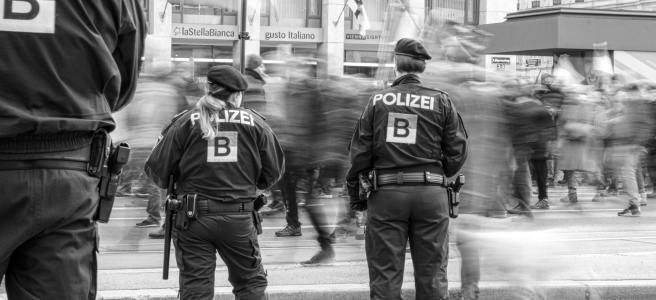
Human police forces and genuine peace-keeping of armies, are a helpful picture of God working through people who show up and hold space for peace to increase. God, then, seems to have a quite consistent purpose in this. To allow violence to collapse in on itself, and to advance peace on earth.

    Keen to hear others thoughts on these ways of thinking about violence in Scripture.

    on *not* knowing God through experience

    Christians believe God can be known. If we want to know what God is like, we aren’t left to seek mountain-top or chemically-induced experiences, wonderful as they may be. We don’t need to take a course in analytic philosophy, as intellectually satisfying as that could be.

    We just behold Christ, and thus we know God.

    Without this revelation, God will be misunderstood. Greatly.

    Creation points us to a creator of some kind. But if all we use to know God is our experience, we’ll have a distorted, incomplete, and warped view of God.

    What we experience as his sustaining of creation could be mistaken for Spinozan Pantheism
    What we experience as his patient non-interference could mistakenly be taken to buttress rationalist Deism
    What we experience as his dramatic occasional miracles could convince you that he is an Interventionist Butler. God On Demand.

    Scripture weaves all these things together in a kind of theological God Temple. Omnipresence, Omniscience, Omnipotence (see Ps 139, the first 18 verses). And then it rips down that temple and re-builds it around the person of Crucified and risen Christ (see Colossians 1 or Hebrews 1).

    Or as Luther said, Crux Sola Est Nostra Theologia
    The Cross is our only Theology.

    praying to God as friend and foe (& everything in between)?

    I just read Job 19 for my morning devotions.

    It’s a profound combination of doubt and faith. In the same chapter, Job accuses God and expresses profound hope in his Redeemer. It’s astounding.

    Check out the stark protests against the Almighty…

    He has blocked my way so I cannot pass;
        he has shrouded my paths in darkness.
    He has stripped me of my honor
        and removed the crown from my head.
    10 He tears me down on every side till I am gone;
        he uproots my hope like a tree.
    11 His anger burns against me;
        he counts me among his enemies.
    12 His troops advance in force;
        they build a siege ramp against me
        and encamp around my tent.

    And contrast this with the profound hope – dare I say Resurrection hope! – later in the chapter…

    25 I know that my redeemer lives,
        and that in the end he will stand on the earth.
    26 And after my skin has been destroyed,
        yet in my flesh I will see God;

    This is a breathtaking combination. Even putting to one side the questions of how specific terms from v25-26 are to be translated… however they should be translated they speak of seeing God after the flesh, skin or body has been destroyed. Seeing God “with my own eyes—I, and not another.” (v.27)

    I wish I had a faith as resilient and honest as Job’s. I feel very disrespectful accusing God. But maybe this language is there in Scripture for us all to express all of life, toxic, tragic, triumphant and technical, to our Father.

    Maybe we are given resources in Scripture to pray to God, no matter how we may feel he is relating to us. With the tender intimacy of ‘Abba’ Father, or the relentless punishing violence of a cold-hearted enemy. Or any of the options in between these extremes. He may feel like a mother or a mercenary. Defense attorney or prosecuting attorney. The judge or indeed… the one taking the punishment of the guilty.