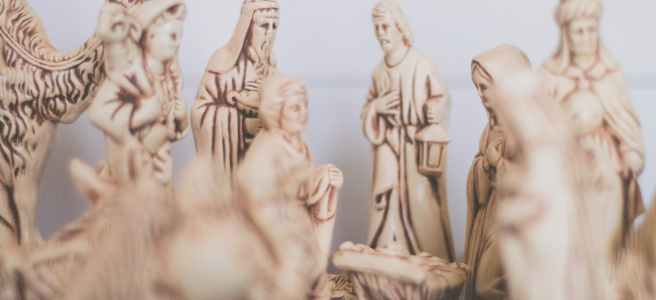

the human connection between anger & temptation

The sermon on the mount is the best teaching on human living. It lays down the patterns for full and complete humanness. After the Beatitudes and opening statements, the first two issues that Jesus deals with are a) anger leading to murder, and b) lust leading to adultery. It won’t do to simply label murder and adultery as unlawful, immoral or wrong. Jesus knows we have to get to the heart of these matters and deal with our anger and lust.

The early chapters of Genesis are also profound in their statements about humanness. Every human is like Cain, who gets ‘very angry’ and is tempted into taking actions that violate the humanity of his ‘brother’. In chapter 6, we see the moral devolution of humanity is so degraded that the beautiful daughters of men were being treated like sexual property. The Creator is grieved to the point of being willing to uncreate the whole creation.

Anger and Sex are connected. We need not illustrate all the ways that this interrelation plays out through rape and pornography.

Their interrelation also shows up in another text that is likewise profoundly awake to the realities of human nature: The Big Book of Alcoholics Anonymous, written by Bill Wilson. The Step 4 inventory (see chapter 5, ‘How it Works’) of ones own life invites an addict to reflect on a) Resentments, b) Fears, c) Sex conduct and d) Harm to others.

Anger and Fear can be understood as a natural pair, just as Sexual dysfunction and Harm can be. For example, consider Resentment and Fear. When I resent another person, I am looking down on them in judgement (perhaps sometimes justified judgement); and when I fear someone, I am looking up at them. When I process my resentments (and fears) properly, I discover that I need not look down on (or up at) others. I can look them in the eye as equals. This humane equality is a profoundly disturbing idea for someone whose identity is dependent on feeling superior to others.

The same is true for the Sex and Harm pairing. Healthy sexual relations is a mutually helpful matter of freely giving and freely receiving. Literally ‘intercourse’. Harm, by nature, including sexual harm, is the opposite of giving and receiving. Instead of giving it forces itself on someone. “You will have this whether you want it or not.” Instead of receiving it is taking. “I’ll take this whether you’re giving it or not.” It is violent and violating.

So therefore, according to Jesus, Moses and Bill, it seems to be a human reality that when we feel resentment towards someone who we feel has wronged us we sooner or later are tempted to some kind of violence or dysfunction.

This connection between anger and temptation, finally, is seen within The Lord’s Prayer, which is – not surprisingly – the humane prayer in the structural centre of the humanising Sermon on the Mount, preached by the one Christians see as the True Human. I am instructed to link my own forgiveness from my Father in heaven, with the forgiveness I am continually working at with others who have ‘transgressed against’ me. Immediately following (and linked to) this, is that I must be on guard against being led ‘into temptation’.

Whether our resentment is justified or irrational, political or personal, sharply focused or a foggy haze; we are reminded of an important moral human truth. The longer we allow anger to fester and burn the more tempted we can be to find our way into a fix, escape, or treat. This could be in the form of a verbal insult, a preachy self-righteous Facebook comment, some form of sexually energising daydream or exploration, or any other drug of choice (working late hours, over-eating, gambling, numbing myself with drink).

And so, the journey to full humanness must include humane prayers where we lay our vulnerability to anger and temptation before the Lord.

Forgive us our trespasses, as we forgive those who trespass against us.
And lead us not into temptation, but deliver us from the Evil One.

Or, we might paraphrase…

Lord, help me to so savour your mercy towards me that I too flow with mercy towards others, especially those I am likely to point the finger of superior judgement towards, whose wrongs I feel the most burned up about. The ones who threaten me and interfere with how I think the world should run. Those who make my blood boil. The ones who, like me, do not deserve mercy.
And keep me far away from letting my anger drive me into some kind of tempting and ultimately self-serving power trip. Deliver me from the fleeting and temporary soothing ego trips of violence of any kind to myself or another.

Amen.
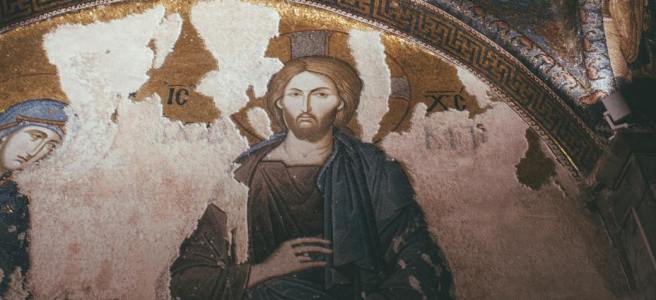
the profound prayer of Jesus

Jesus was actually quite a wise student of human nature. When his disciples asked him to teach them to pray, he gave the best answer. His prayer includes everything we need. It’s theologically, practically, psychologically and poetically brilliant.

  • Worship: Our Father who art in heaven, hallowed be Your name.
    • This reminds me that all prayer and living must be done in the glad worshipful awareness that God is our Father, and that God is the ultimate reality over all creation.
  • Submission: Thy kingdom come, thy will be done, on earth as it is in heaven.
    • This reminds me that ultimately I have to submit to God’s plan and desire. God is the ground of all ethical/moral imagination. All notions of health, well-being and flourishing are only able to be conceived or pursued because of the sovereign permission and power of God.
  • Gratitude: Give us this day our daily bread…
    • This reminds me that God provides everything: a universe, a fertile planet with liquid water and friendly for complex life, grain and humans who know how to make flour, and ultimately the nourishment and simplicity of bread. It reminds me of the need to share bread with the needy. It reminds me that there is enough to go around. It reminds me that I can be secure in the provision of God.
  • Reconciliation: Forgive us our trespasses, as we forgive those who trespass against us.
    • This reminds me that my own experience of God’s forgiveness is linked with my own willingness to be forgiving. If I stay angry, resentful and self-pitiful toward others, I will hinder my capacity to engage fruitfully with the mercy of God that is continually offered to me and the people I may be angry with.
  • Righteousness: And lead us not into temptation, but deliver us from the Evil One.
    • This reminds me that I am always progressing either towards sin or righteousness. I’m either going with the flow of the Evil One, or seeking the power and presence of the Holy One. If that sounds binary, it’s because it is. Some things are just that simple.
  • Mission: For thine is the kingdom, the power and the glory, forever and ever – Amen.
    • This reminds me to carry this prayerful unceasing awareness into each day. My life is offered to God’s mission. Every situation I may face is an opportunity to practice Worship, Submission, Gratitude, Reconciliation and Righteousness. Everywhere. Always. Till kingdom come.

The final observation is that each line instills a principle that enables the next.

Worshipful awareness of God’s ultimacy compels me to submit to his reign over all…
This enables me to see and appreciate his provision…
This security in God’s love is the foundation for giving up my anger and working at reconciliation…
And if I’m secure in God and being reconciled with others, I’m less likely to have a mind that feels angry, victimised, wronged, sore and therefore less tempted to engage in a range of soothing, self-justifying sins like gossip, vengeance, lust, greed, substance abuse, self-harm or other-harm.

Lord, you are the king of the universe. It’s all about you.
I worship you in all of my scientific ignorance and all my poetic babbling.
Your way is what we need. It’s what I need.

If we did what you want, we would know peace.
Literally everything is a gift from you…

From singularity to solar systems to sourdough
From creation to redemption.
I am safe in your loving provision and forgiveness.
Unclench my angry fists towards others who I feel wronged by…
And hush the frustrated self-talk that blocks the flow of your mercy to me, and through me to others.
Help me help myself to be a person of reconciliation, forgiveness and understanding.
Help me help myself to say no to the luxurious comforts of indulgent greed, lust and power.
Unlock the chains I bind myself in.
Train me to be of service to others in your mission of love for all people and all creation.
It is always all about You.
Amen.

potential & real sinners

I’m not an alcoholic.
But… I’m a real fan of the 12 steps of Alcoholics Anonymous.

The forward to The Twelve Steps and Twelve Traditions (a.k.a. the 12×12) acknowledges that the contents of that book (and AA wisdom more generally) “might arouse interest and find application outside of A.A. itself.” Non-alcoholics who practice the 12 steps report that “they have been able to meet other difficulties of life.” The steps can be “a way to happy and effective living”, regardless of whether one is an alcoholic or not.


drinkers and ‘real alcoholics’

As I look through the AA Big Book and the 12×12 I’m fascinated by a particular distinction made between the “moderate drinker”, the “hard drinker” and the “real alcoholic”. It’s worth quoting directly from the Big Book:

Moderate drinkers have little trouble in giving up liquor entirely if they have good reason for it. They can take it or leave it alone.

Then we have a certain type of hard drinker. He may have the habit badly enough to gradually impair him physically and mentally. It may cause him to die a few years before his time. If a sufficiently strong reason—ill health, falling in love, change of environment, or the warning of a doctor—becomes operative, this man can also stop or moderate, although he may find it difficult and troublesome and may even need medical attention.

But what about the real alcoholic? He may start off as a moderate drinker; he may or may not become a continuous hard drinker; but at some stage of his drinking career he begins to lose all control of his liquor consumption, once he starts to drink.

AA Big Book, 20-21

Note the role of reason in restricting the moderate and hard drinker. Merely “good” reason can regulate the moderate drinker, while it takes “sufficiently strong reason” to stop the hard drinker. Both of them can be stopped with reason. Not so with the real alcoholic. The real alcoholic is immune to all reasons to not drink. Sooner or later, regardless of intermittent and temporary experiences of imagined control, it becomes clear even to them that they cannot stop once they start.

What does this have to do with the interest that people like me, who (as far as they know) are not alcoholics, but who find the Steps and the wisdom of AA useful for living? More specifically still, what does it have to do with a Christian focus on kingdom living?

The connection lies in properly understanding the relationship between addiction and sin.


addiction and sin

There are differences between the two. AA suggests not all people are ‘real alcoholics’ as referred to above. Meanwhile, Christianity contends that all are sinners.

But there are similarities.

The sharp distinction AA makes between alcoholics and non-alcoholics does not mean that no common patterns exist when it comes to the human consumption of alcohol. You don’t have to be a ‘real alcoholic’ to really get into real trouble with alcohol. In fact, Part II of the AA Big Book entirely contains stories of “actual or potential alcoholics” who became convinced that “compulsive alcoholism already had them”. They didn’t want alcoholism to progress like cancer to the state of being “malignant… before seeking help.” They “didn’t want to hit bottom because, thank God, we could see the bottom. Actually, the bottom came up and hit us”

Meanwhile, with sin, the fact that Christianity places all of humanity in one sinful boat does not mean that everyone experiences sinfulness in exactly the same way all the time. Some people can see their sin and then repent almost immediately. (This is certainly the recommended strategy for life!) Others struggle with it for a while, experience some mild consequences, and then turn around. Others still, like the lost son in Luke 15, waste their whole inheritance and find their entire lives ruined. In the Christian understanding, sin can grow and develop to the point where it becomes addiction. Repeated behaviour (for good or for ill) becomes habitual, ritualistic, automatic and second nature. The wisest path is to “see the bottom” before you hit it. See the destruction that sin can cause and turn around. Seek God’s love and spirit and kingdom.

So then… the parallels are clear.

I am not any kind of alcoholic (that I know of? yet!?), but I know I am not only a potential sinner, but a real one. Just like an alcoholic needs to work a program or die, so also I need to pursue a live of prayer and service or I’ll wreck my life. I need to pursue the grace and spirit and strength of God, just like a “real alcoholic” must seek escape from alcoholism “with all the desperation of drowning men.”

mixed fruit

I continue my morning readings, currently in 1 Samuel.

This morning was chapter 19, where Saul tries (again) to pin David to the wall with (seemingly) his favourite thing to have in his hand – a spear. (see this post for more on that theme)

Then he gets swept up in some pretty intense prophetic activity while trying to hunt down David. So intense that he disrobes and lies all night naked.

This is what you might call conflicting accounts. Saul is a mixed bag of a human being (like all of us – even David), and he is bearing mixed fruit.

He gets so wrapped up in this prophetic activity that he appears emotionally overwhelmed and out of himself. Rumours are started about him: “Is Saul also among the prophets?”

But then again, he seems waaaaaaaaaaay too comfortable with a spear in his hand. “Hey Saul, you are looking pretty stressed and distressed… and you and David haven’t been getting on well for a bit… so maybe don’t invite him to play music for you? Oh wait… OK there he is… fine… Well, maybe at the very least, just don’t pick up that spea…. Oh heck, you just tried to kill David… again!?”

Saul’s narrative arc is trending down big-time. And the intense prophetic experience does not undo that.

This should give us pause, too. Having intense spiritual experiences does not prove that we are spiritually healthy.

the backspace button

I love hammering that backspace button. I use it. I abuse it. If something comes out in a way I don’t like it, I smash that key and redo it.

As a kid, we had an old mechanical typewriter. Ribbons. Ink. That sound. Shunk, shunk, shunk. Shunk shunk. Grrrrrrrrrrrrrrrp. (That’s the sound of making the carriage ‘return’ to beginning of the line) Shunk. Shunk shunk.

I feel like as a modern society we’ve gotten used to being able to (seemingly) easily undo things. I found it frustrating recently when trying to do a long series of ‘undo-ing’ on a PowerPoint presentation. Why, I asked myself, had this machine forgotten the progression of my work such that I couldn’t just go back at any time to the point I wanted to?

I wonder if we treat life like that a bit? If we don’t like something – hit the big red button. Delete. Undo. Backspace.

In some ways this is a very good thing. We don’t have to fear errors.

If you were so cursed as to make a mistake on an old typewriter, there was a litany of solutions we went through. At one point you had to hold some sheet of white stuff against the page, and type the exact same character in the exact same place. Or then there was liquid white out. Then there was correction tape. It was a lot of work.

((wait, does anyone remember word-processor machines? Like those weird in-between devices between typewriters and computers??))

It’s better now. Mistakes are gloriously undo-able. That kind of attitude has positive echoes in life for those who live accordingly. My mistakes, my errors and sins, are not the end of the world. Neither need be the misdeeds of others. It can be amended, forgiven, gotten past, put aside, or otherwise dealt with through the application of relational white out. Spiritual correction tape. The loving backspace button.

But there’s a downside. Sometimes errors are not so easily fixed. Damage is done and can’t be redone. There’s probably no need to give examples here. Sometimes an error leaves a permanent mark, an unfillable hole, an indelible stamp.

In the Christian faith, there is a striking balance when it comes to mistakes, evil, damage and sin. The harm from wrongdoing is to be put aside as quickly and routinely as possible. But there is acknowledgement that some groans will continue until the new creation.

Maybe this can give us a helpful posture of fearless caution as we navigate life. On the one hand typing our way thorough life shouldn’t feel like walking a tightrope. We can get things wrong, and get past them. And yet. We shouldn’t plonk down letters and words and strike the keyboard of live with reckless abandon. We should take care.

Happy typing to us all.

prophesy against the prophets

The word of the Lord came to me: “Son of man, prophesy against the prophets of Israel who are now prophesying. Say to those who prophesy out of their own imagination: ‘Hear the word of the Lord! This is what the Sovereign Lord says: Woe to the foolish prophets who follow their own spirit and have seen nothing! Your prophets, Israel, are like jackals among ruins. You have not gone up to the breaches in the wall to repair it for the people of Israel so that it will stand firm in the battle on the day of the Lord. Their visions are false and their divinations a lie. Even though the Lord has not sent them, they say, “The Lord declares,” and expect him to fulfill their words. Have you not seen false visions and uttered lying divinations when you say, “The Lord declares,” though I have not spoken?

Ezekiel 13:1-7

What makes a person, a church, a ministry, a sermon, or what-have-you prophetic? It depends on what you think prophecy is, or who prophets are.

Prophecy is the activity of prophets. Yes, that sounds circular. Well, a prophet (navi in Hebrew) is one who sees. Everyone sees things in one sense, but a prophet is someone who can see things others aren’t seeing, or aren’t seeing yet. Prophets change the vision of a community.

What the heck is going on in this passage, then, when Ezekiel is told to prophecy against the prophets? Hint: he’s criticizing their prophecy.

Prophetic Critique

Criticism is kind of a thing that we need if we are going to be prophetic. But I reckon we need just the right amount of it. And it needs to be directed at things that need to be critiqued. The alternatives are: a) critiquing what does not need critique, or b) not critiquing what needs critique.

What gets criticized in your church context? Usually in a church setting, criticism is directed externally at ‘the world’. And fair enough, too. There are things we can rightly critique. Sometimes a church will criticize other churches. And that can have its place too, and it could in a sense be what Ezekiel is doing here.

But I think it goes even further.

This is, I think, critique from within.

The Value of Critique

Ezekiel is critiquing “the prophets of Israel”. Ezekiel was a priest, a Levite, a member of God’s people. Prophetic critique was most often turned on the people of God, to call them back to the ways of God.

When it comes to critiquing our leaders, we go to extremes. None or way too much. When it comes to leaders welcoming or dealing with critique, we have room for improvement. Critique can be unhelpful in various ways:

  • When the one critiquing exaggerates the criticism, making it easier to dismiss it.
  • When the critic is insensitive to the timing (e.g. don’t critique a leader immediately after the church service!) of the critique.
  • When one is closed off to critique, feeling they never need it.

Wise leaders know how to remain open to critique, and to be willing to even seek it out at times, and follow up the critique with change and work. The prophets of Israel in this passage are – shall we say – not open to critique.

Pretend Prophets

Ezekiel doesn’t hold back. He calls their prophecy false. Prophesying out of their own imagination. Following their own spirit. Seeing nothing. Blind seers! The Lord has not sent them, and the Lord has not spoken what they are saying.

That is pretty intense. Imagine modern prophets being told they are full of it!? “Hey you so-called anointed and appointed prophets going around doing your thing with your prophetic pastor friends. You’re making it all up, bro. That’s 0% God’s spirit, and 100% your ego. Stop lying and pretending.”

Eugene Peterson’s rendering is provocative. These prophets are “making things up out of their own heads and calling it ‘prophesying.’” They “fantasize comforting illusions and preach lying sermons. They say ‘God says . . .’ when God hasn’t so much as breathed in their direction. And yet they stand around thinking that something they said is going to happen.”

A bit later in Ezekiel 22:23-29 , the critique is extended to everyone – we might say the five P’s: Princes, Priests, Prophets, Politicians, and the People. Again the prophets are accused of “false visions and lying divinations”, and saying “ ‘This is what the Sovereign Lord says’—when the Lord has not spoken. “

Positive Prophets?

The wider context in Ezekiel (and Amos, and Micah, and Isaiah, and…) is violence, idolatry, compromise, injustice, sin. Things are awful, and these false prophets are papering over it all with positive prophecies, whitewashing a thin wall, saying “peace” when there is no peace (Ezekiel 13:10, 16 – see also Jeremiah 28:9 where Jeremiah makes is clear that prophesying peace places the prophet under special accountability!).

Restorative Prophecy

It is really easy to critique, and I’ve erred (and I really do mean erred!) in the past on the side of critiquing where it was not needed or helpful or appropriate. But the prophets of Scripture are absolutely clear: being ‘prophetic’ has nothing to do with papering over the sins of God’s people with positive distracting declarations of the nice things God is going to do. This is the opposite of prophecy. Instead of seeing and saying the transformative things God wants to say, such happy distractions don’t transform anyone, and remain blind to what is going on and what God is saying.

God desires us to turn from our arrogance, violence, sin and injustice; and become channels of love, grace, mercy, hospitality, care, healing and reconciliation. Where the Church is turning from evil and doing good, we dare not critique that. But where Christians are participating in things that do real harm to people. Critique is coming.

Sometimes we need to prophesy against the prophets.