

Sadly, I won’t be home for Christmas.
At least my original home…
I’ve lived almost as long in Aotearoa NZ as I did back home in the USA…
This has me thinking about place and presence.
And this, in turn, has me building a mental taxonomy of the different kinds of absence.
The choice between absence and presence becomes manifest at Christmas.
I Can’t Be There
One type of absence is simply about physics. As much as I might like to, science won’t let me be in Birkenhead, Auckland, New Zealand and Bolivar, Missouri, United States – at the same time – for Christmas.
This kind of absence is kind and regretful. I give my apologies and excuse myself.
It’s also very practical, as in, “Don’t include me in table-setting numbers.”
I Won’t Be There
There’s another type of absence that is not about physical possibility but perceived propriety. It’s about judgment. I am constrained not by physics, but by ethics.
After the 2024 re-election of Donald Trump, a phenomenon called “Boycotting Thanksgiving” happened, where people would protest both his re-election and family members who voted for him by absenting themselves from family Thanksgiving gatherings. Trump support trumps family relationships..
Ironically, boycotting your family at Thanksgiving for doing politics wrong reminds me of the Exclusive Brethren (Plymouth Brethren Christian Church) practice of ‘shunning’ your family for doing religion wrong.
This kind of in-your-face face-turning has many forms. ‘Snubbing’ or ‘blanking’ is famously pictured in The Sneetches by Dr. Seuss. The Star-belly sneetches, knowing themselves to be superior to the Plain-belly sneetches, “saunter straight past them without even talking.” It’s the same posture as the hilariously exaggerated arrogance of the Pharisee in Jesus’ parable where he thanks God he is not like the tax-collector (Luke 18:9-14).
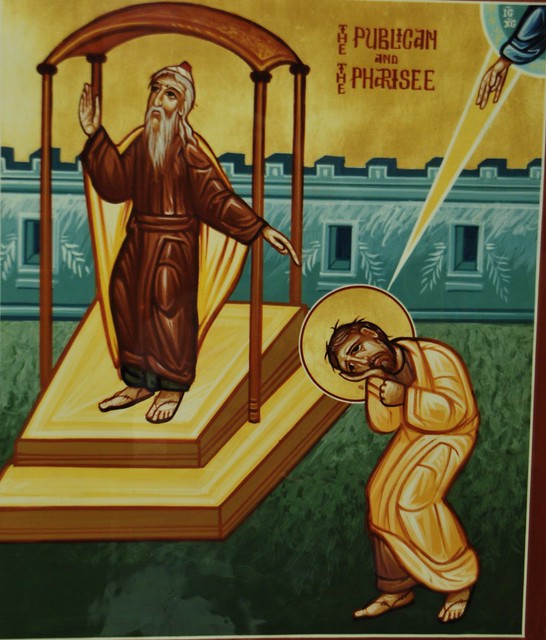
This kind of absence is passive-aggressive and judgmental. I toss the hand-grenade over the wall and it explodes with the message that reads, “I won’t be around that person.” I protest the presence of ‘that person’ by excluding myself from the gathering or denying them the dignity of eye-contact.
You Can’t Be There
The third kind of absence is about safety. And that makes it really tricky…
Safety is really important – obviously. For example, on the one hand, we need to reform our approaches to crime and incarceration, but on the other hand, the fact still remains that at least in specific situations some humans need to be kept away from other humans. But safety is different from what is sometimes called safety-ism…
What concerns me is when this kind of extreme language is used of much more ordinary situations. When ‘safety’ language is used to describe situations that are not truly dangerous, but about difference of opinion and clashes of personalities. Even more concerning is when such ‘safety’ language is used to justify excluding people from spaces.
Human spaces like churches, volunteer organisations, workplaces and sports teams will always have challenges, because of the humans that comprise them. But being ‘difficult’ is not the same thing as being ‘toxic’ or ‘unsafe’. It’s one thing to need some time-out in a situation, or put a time-limit on a conversation. There are a thousand ways to stay present with ordinary difficult people rather than excluding or rejecting them.
This kind of enforced absence can feel authoritarian. In the name of virtuous protection, it points the finger and says “Yep exclusion may sound rough, but that’s exactly what you deserve.” It imagines itself as rescuing victims from persecutors.
I’ll See You There
By contrast, Advent and Christmas is about the God who is omni-present (present everywhere) becoming uniquely and locally present in the person of Jesus Christ. The Creator whose presence surges through the cosmos in a way that electricity can only dream of, who never ‘left’ the creation, majestically ‘arrives’ within and connects to the the creation, to the earth, to humanity, to the nation of Israel, to Mary the Theotokos (the God-bearer).
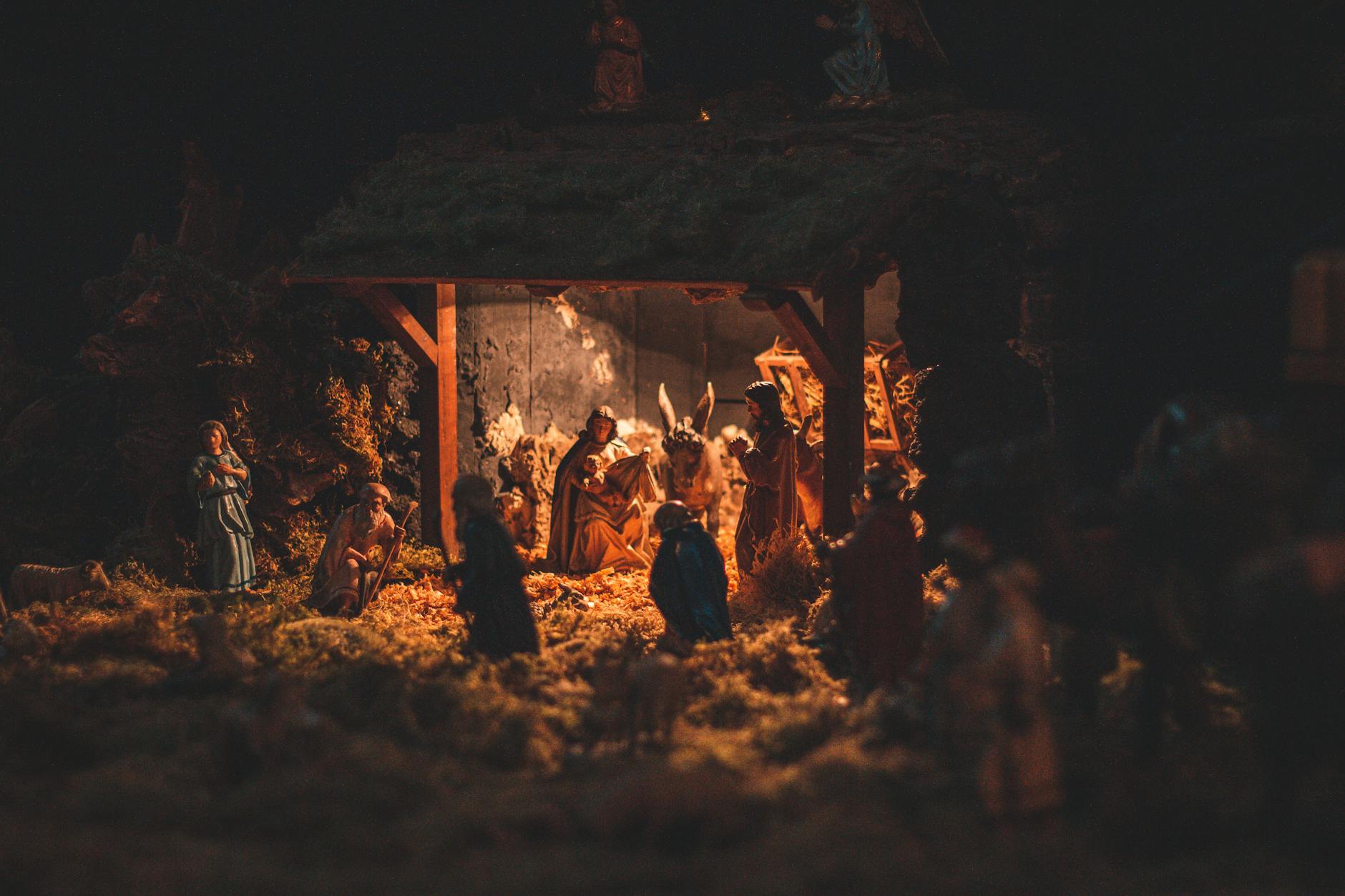
This is the God of Scripture who promises his unique presence (described by rabbinic tradition as Shekinah) in various ways, times and yes places. It’s the God who walks in the Garden, meets on Mountains like Sinai, dwells between the cherubim above the ark, and mysteriously descends to feed his people through Bread and Wine.
This is a vision of God whose cosmic presence is always a reality, but who will never coerce us to seek out, align with, and thus encounter and experience his local Presence. Christ is the Incarnation of a God who loves to welcome all who seek Him (including the ones we least likely expect to be looking for God). This is a Saviour who dines with the one who betrayed him to death. And who doesn’t flinch when religious leaders like priests, Pharisees and pastors exclude themselves from his presence.
It’s a God who is never ‘not there’.
It’s a God who says ‘I’ll see you there.’
What does this vision of God mean for us this Christmas?
It can mean as much as you dare to let it mean.
May it mean looking for the presence of God in those you are least likely to see it in.
May it mean going to that dinner, that function, that space where ‘they’ will be.
May it mean courageously seeking out that person you have cut off and extending an olive branch.
May it mean eye-contact or even a hand-shake with someone you don’t really like.
May it mean forgoing the judgment of absence…
And instead practicing the grace of presence.

 Recovering the Kingdom